
Garage Doors · Burlington
Understanding your door
Garage door trouble tends to announce itself: a new sound, a slower climb, a gap under the seal. These articles help you read those signals and decide what to do next.
Call now · open 24/7(289) 816-6526- Service bulletin 1Garage Door Cable Replacement: preparing for the visitYour older door has springs along the tracks, and one cable has slipped off its pulley and dangles slack. The door lifts crooked and needs a shoulder to close, when it used to glide.Read
- Service bulletin 2Garage Door Balance Adjustment: comparing quotesA little, twice a year. Use a product sold for garage doors on the spring coils, hinge pins, roller stems, bearings and bracket pins, and cycle the door a few times to work it in.Read
- Service bulletin 3Garage Door Safety Inspection: what the visit coversWinter is hard on the bottom of a garage door, and an inspection here pays particular attention to it. Slush and salt collect where the cables loop onto the bottom brackets and where the lowest hinges sit, the bottom…Read
Before you book
Repair & Maintenance
Does winter change what you look for?
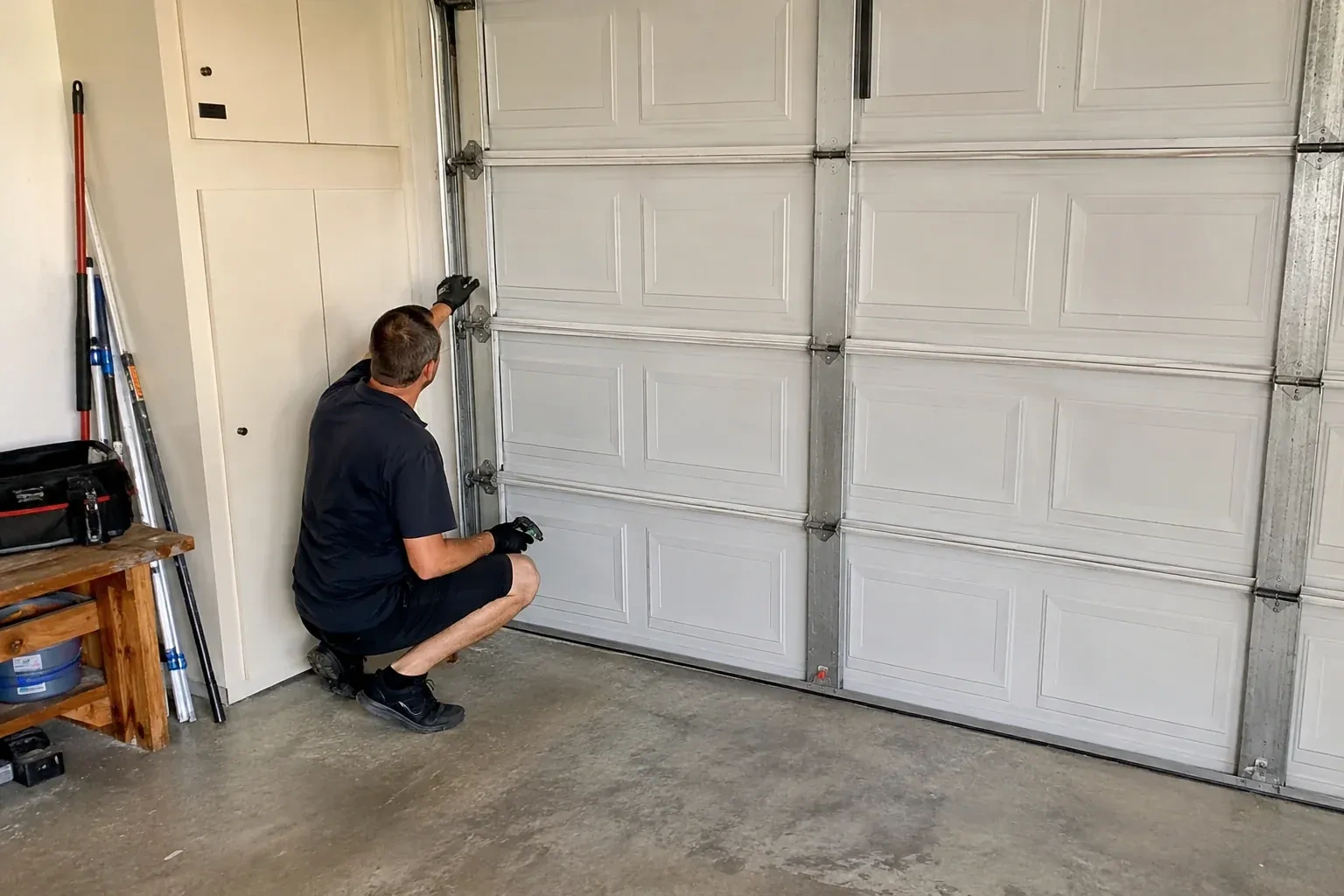
Yes, mostly at floor level. Months of slush and road salt reach the lowest hinges, the bottom brackets and the loop of each cable before anything else on the door, so those get a close look for rust. The technician also checks whether the bottom seal has been freezing to the slab, how the drive has coped with cold, stiff starts, and whether frost or salt film has been blinding the sensors near the floor. Garage Door Safety Inspection
Do you adjust the springs during a tune-up?
Springs are inspected and lubricated during a tune-up, and the balance test tells us whether they are carrying the door's weight properly. Changing their tension is a separate, deliberate job: the door is clamped to the track, winding bars are used on a torsion spring, and the technician works from a stable position. If the balance check shows the springs need adjustment or replacement, you receive that as its own recommendation with its own quote. Garage Door Tune-Up
Should I choose nylon or steel replacement rollers?
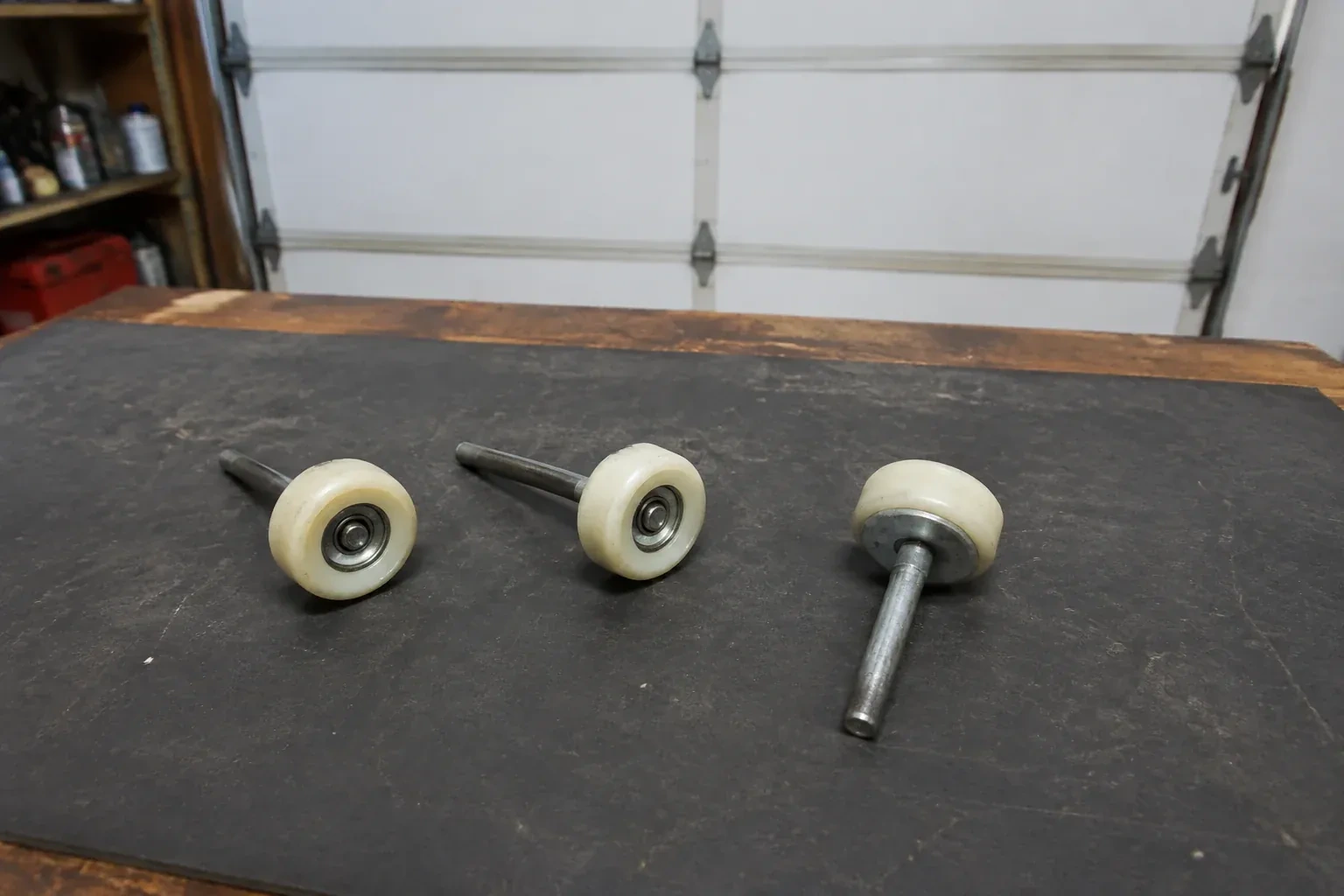
Both work when matched to the door. Steel rollers are durable and cope with heavy doors but run louder; nylon rollers with sealed bearings are noticeably quieter and need less attention, which suits an attached garage under a bedroom. What matters more than the material is the stem length and wheel size matching the hinges and track, and replacing all the rollers together so the door rides evenly on every one. Off-Track Garage Door Reset
Why is the bottom section handled differently from the others?
The bottom section is where the lift cables attach, through the bottom brackets at each end, and those cables are under the full pull of the springs. Before the brackets come off, the springs have to be unwound or unhooked so the cables go slack. The bottom section also carries the seal retainer and astragal that meet the floor. After the new section is in, the springs are re-tensioned and the balance reset. Garage Door Panel Replacement
Springs & Hardware
Should the track be lubricated too?
No. The track is meant to be clean and dry so the wheels roll rather than slide. Grease or spray in the raceway collects dust, sand and, in winter, salt and slush, forming a paste that grinds the wheels and can let a roller skid instead of turn. The technician cleans the track and leaves it dry; at home, a wipe with a cloth and an occasional sweep of the bottom few inches is all the track wants. Garage Door Roller Replacement
Will new hinges make the door quieter?
Often noticeably. A cracked or loose hinge is the source of many pops, clicks and rattles, and a hinge that holds its roller square lets the wheel run flat instead of scraping the track lip. Combined with fresh lubricant on the knuckles and rollers, the door settles into a steady rumble. Any noise that remains usually points to the rollers, the opener chain or the springs, which the technician can identify for you. Garage Door Hinge Replacement
What does track radius mean, and does it matter for a replacement piece?
The radius is the size of the curve where the track turns from vertical to horizontal, typically 12 or 15 inches on two-inch residential track. It fixes how high the door climbs before it turns and how much headroom is needed, and the cable drums and spring setup are chosen around it. A replacement curve has to match the other side, otherwise the door meets the horizontal run at different heights and twists as it opens. Garage Door Track Repair or Replacement
What happens during the visit?
The opener is disconnected and the door clamped. The technician identifies the counterbalance type, inspects both cables, the drums, brackets, rollers, track and springs, and explains what is found. The springs are unloaded, the old cables removed, new ones fitted and set so the door is level, and the springs wound back. The door is then balanced by hand, the opener reconnected and its safety features tested while you watch. Garage Door Cable Replacement
Openers & Access
The motor hums but the door stays put. What is usually wrong?
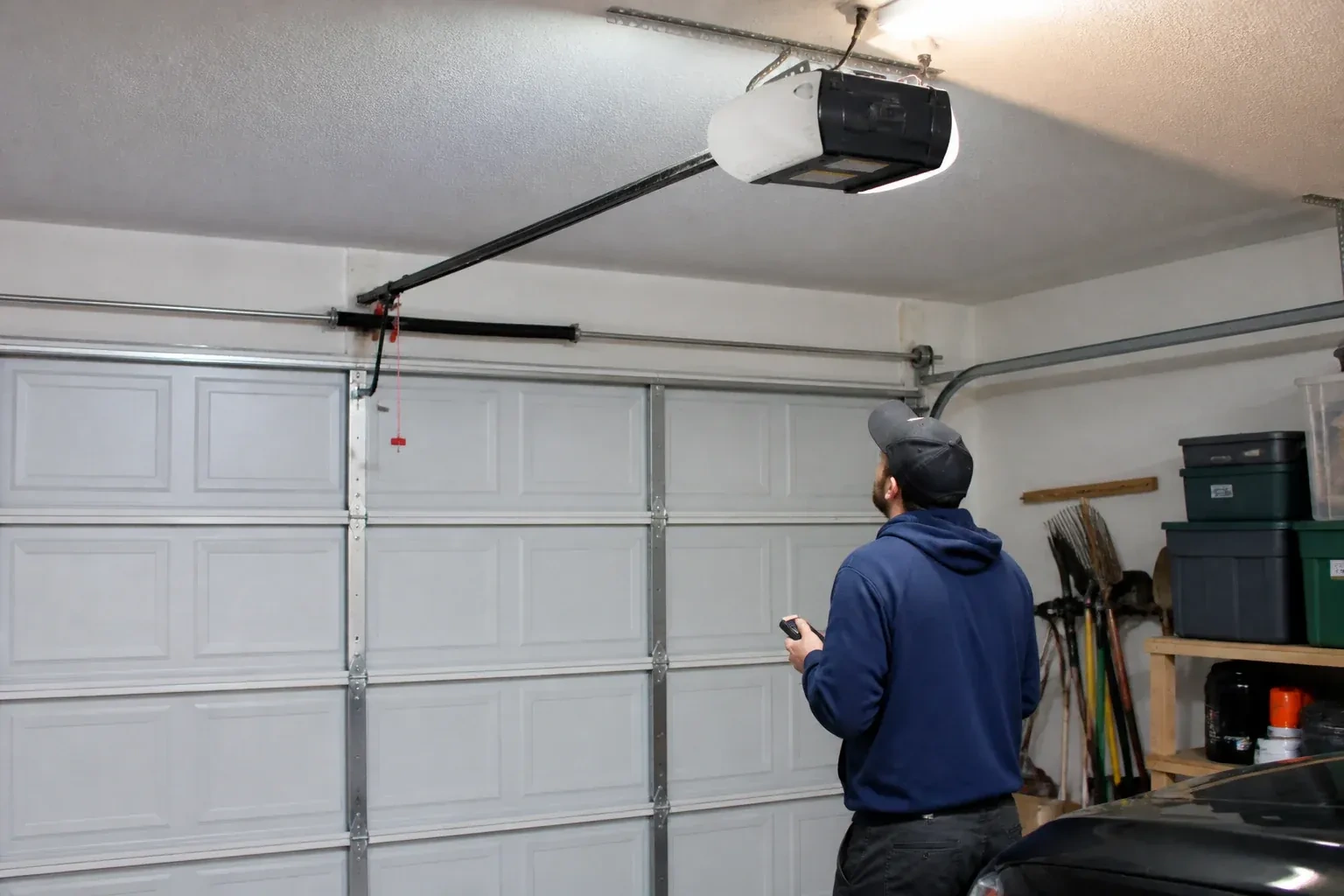
A hum with no movement means the motor is receiving power but something is stopping it turning, or stopping its turn from reaching the door. On AC units a failed start capacitor is the common cause; on chain-drive heads a stripped nylon drive gear is the other. Less often the trolley has simply been released from the carriage. Each of these is a routine repair once identified, and the hum is one of the more helpful sounds an opener makes. Garage Door Opener Diagnosis and Repair
Why does the door jerk or jump at the same spot every time?
A repeatable jolt at one point on the rail is usually a chain problem meeting a sprocket problem: a stiff link or a spread master link passing over worn sprocket teeth, so the chain rides up and drops a tooth. It can also be a burr or a splice plate on the rail where the trolley catches, or a roller on the door hanging up in the track at that height. The technician runs the door by hand first to tell the two apart. Chain-Drive Opener Repair
How long should a belt last once repaired?
A belt's life is counted in cycles and years, and on a balanced door with the rail straight and the tension right it runs for many years. What shortens it is a heavy door, an over-tight adjustment, a bent rail rubbing one edge, or grease on the rubber. Keep the door balanced and lubricated, the belt dry, and glance along the rail a few times a year. Belt-Drive Opener Repair
What do timer-to-close, vacation lock and motion lighting do?
Three conveniences you set from the console or the app. Timer-to-close counts down after the door opens and shuts it again after the minutes you choose, so a door left up at bedtime closes itself. Vacation lock disables every handheld remote until you release it, useful when a remote stays in a parked car or the house is empty for a week. Motion lighting brings the lamps on as you walk in and dims them after a delay. Garage Door Opener Replacement
Installation & Upgrades
What makes a sectional door different from a one-piece door?
A sectional door is built from horizontal panels joined by hinges. Rollers guide those panels up vertical track, around a curve and into horizontal track overhead. Because the sections bend at their joints, the door can travel close to the ceiling rather than swinging outward as one rigid slab. Sectional Garage Door Replacement
How should I prepare the garage for installation?
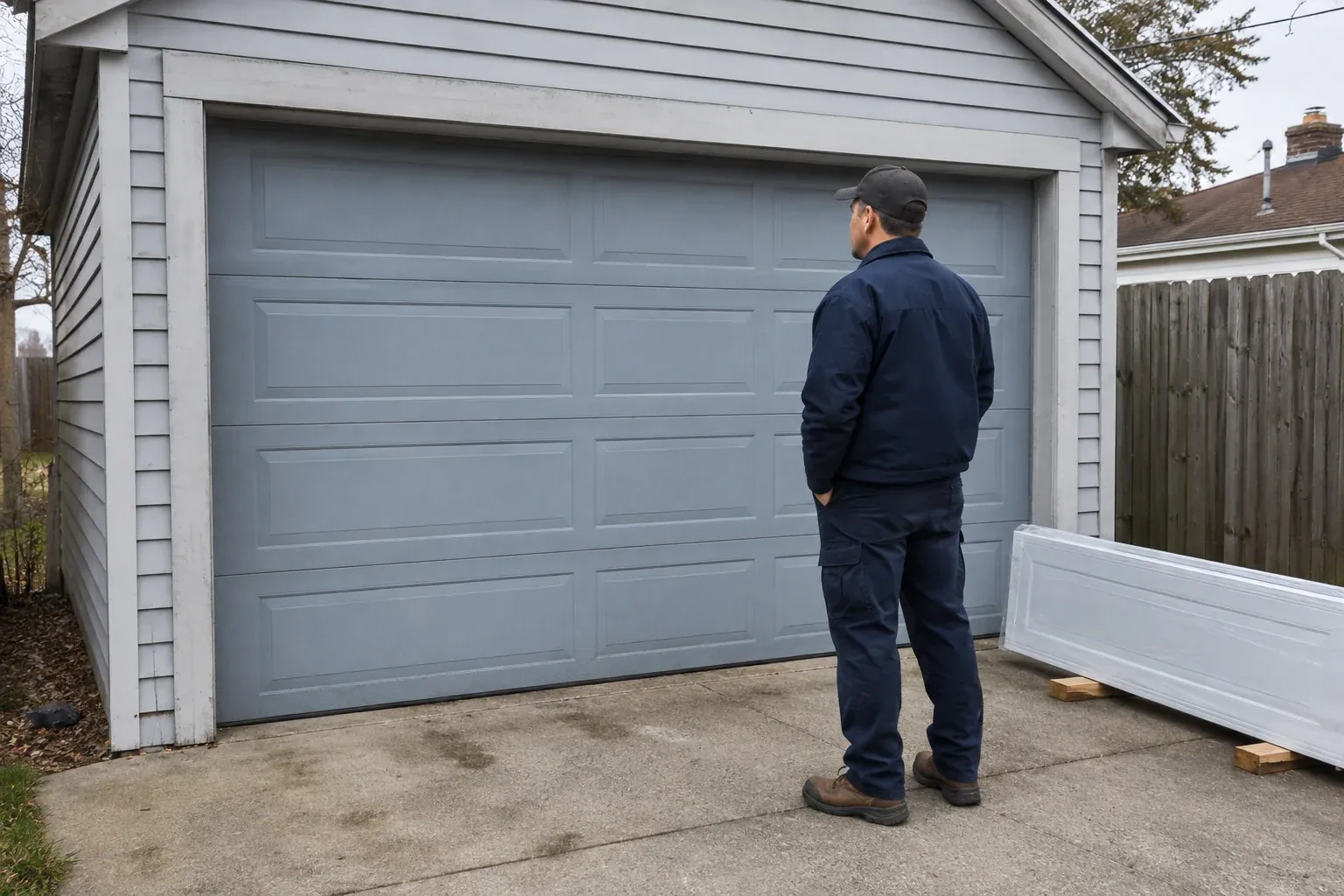
Move vehicles out and clear floor space across the full width of the opening plus a useful working area inside. Remove hanging items, bicycles and storage that intrude into the track or ceiling zone. Provide access to electrical controls and keep pets away from the work area. The installer can identify any unusually large staging space needed for wide sections beforehand. Insulated Steel Garage Door Installation
What should I watch for during strong winds?
During strong or severe winds, shelter in a basement or small interior room away from windows, doors and exterior walls, rather than watching the door while it blows. Once conditions have passed, look over the opening: note unusual bowing, new creases, displaced rollers, loose attachments, perimeter gaps, or movement at brackets and jambs, and let these details guide a later assessment. Wind-Rated Garage Door Replacement
May the new door use my existing tracks?
Only when the new door instructions and field assessment establish compatibility. Track spacing and curves relate to section thickness, roller position, door weight, headroom and opener layout. A track that suited the former door may place the new sections incorrectly. Treating tracks and sections as one designed system provides a clearer basis for alignment, balance and future parts identification. Carriage-House Garage Door Installation
Open 24/7
Request a visit
Ask about your door
Call now · open 24/7(289) 816-6526- On-site assessment preferred
- Same fees day, night or weekend
- 22 years in business