Book soon Openers · Palmer
Photo-Eye Sensor Alignment or Replacement in Palmer
The door will only go down while a finger stays on the wall button; let go and it stops or reverses. From the remote it opens fine but never closes, so someone has to stand in the garage every time.
Call now · open 24/7(289) 816-6526Right now
Before the door is looked at
Call (289) 816-6526, open 24/7.
Never bypass, tape over or relocate the sensors to make a door close; a door that reverses is reporting something worth fixing.
In plain words
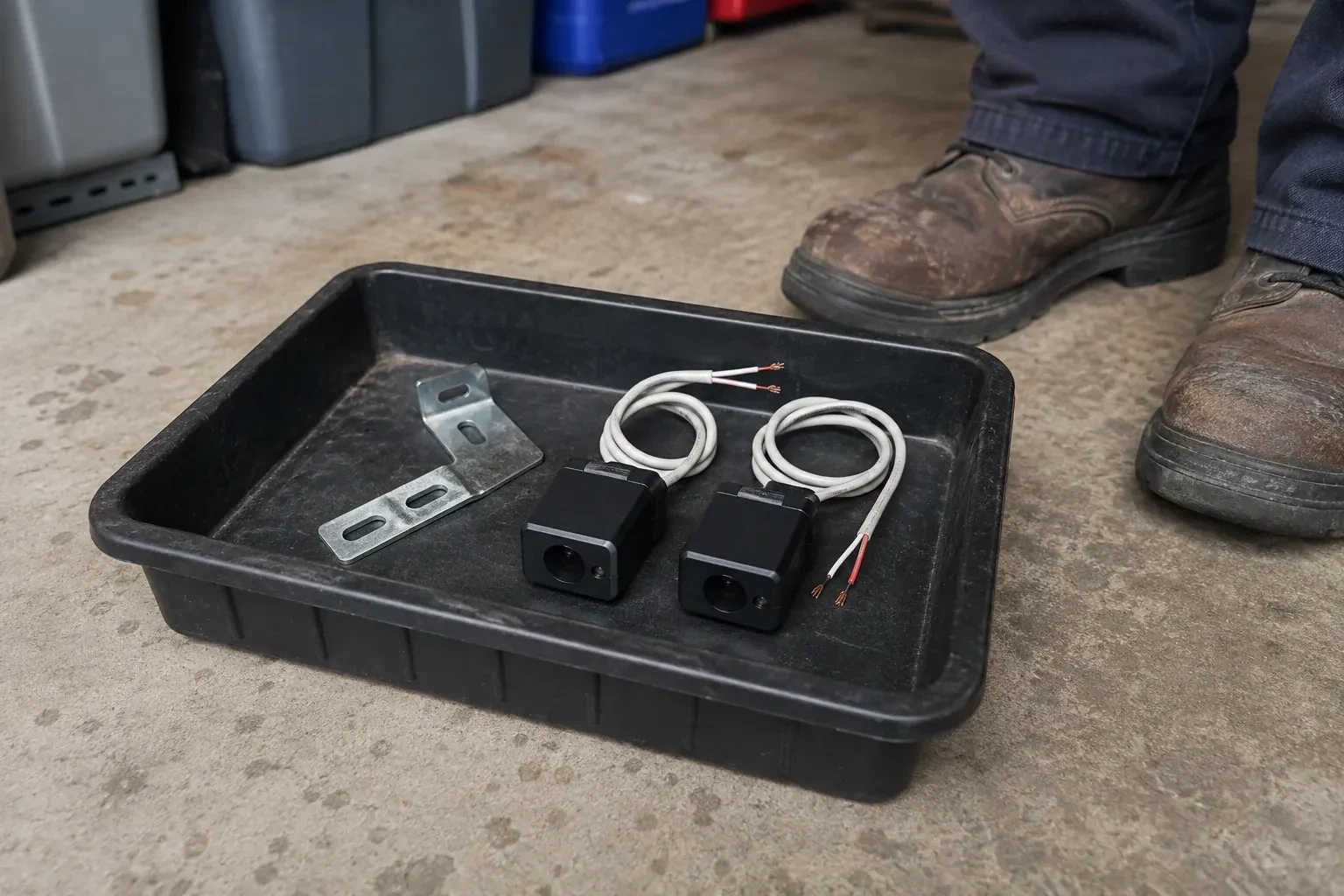
Most sensor visits end in alignment rather than new parts. The brackets that hold the sensors ride on the door track or the wall, and they get bumped by bins, tires and shovels until the two lenses no longer look at each other. The technician resets both sensors to the same height, loosens the wing nuts, aims the pair until the receiving light holds steady, tightens everything and secures the wire. Replacement is the answer when a lens is crazed, a housing is cracked, water has got inside or the indicator stays dark with good wiring, and then a pair matched to the opener is fitted.
How the visit goesThe door will only go down while a finger stays on the wall button; let go and it stops or reverses. From the remote it opens fine but never closes, so someone has to stand in the garage every time.
Photo-Eye Sensor Alignment or Replacement · Palmer
How the visit goes
- 1
Brackets and height on both sides
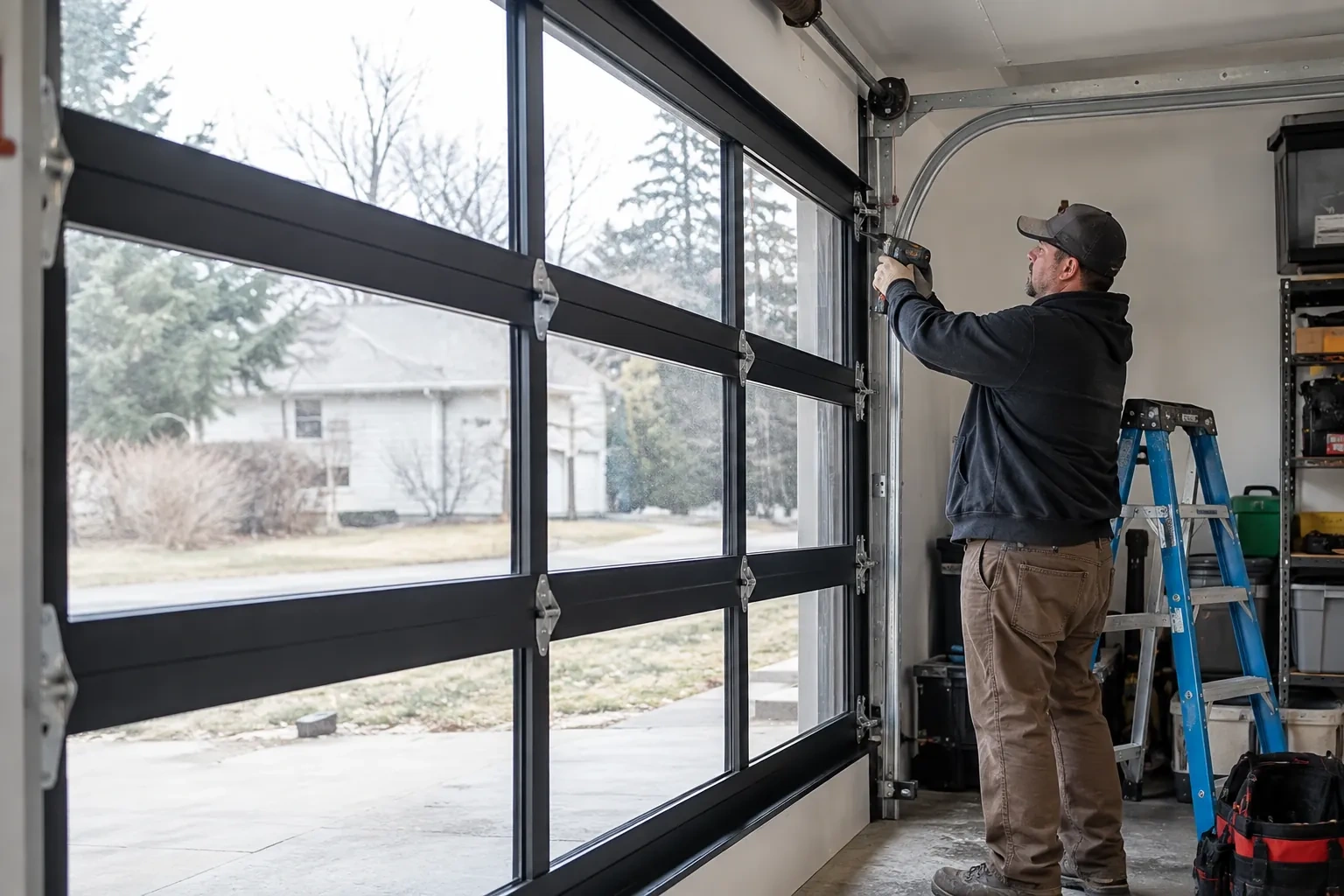
The two sensors have to sit at the same height, level, and facing each other squarely, no higher than about 15 cm (6 in) above the floor so the beam catches a small child or a pet. The technician measures both sides, because a bracket that has slipped a couple of centimetres down a track leg is enough to lose the beam. Each bracket is checked for bends from a bumper or a bin, for loose carriage bolts or wing nuts, and for rust where salt slush has sat against it for winters on end. A bracket screwed to a wall or the floor is checked for anchors that have worked loose.
- 2
Proving it with the two tests
No sensor job is finished on a steady light alone. The door is closed from the wall control and from a remote, and while it is on its way down an object is passed through the beam; the door must stop and return to fully open. Then a 2x4 is laid flat on the floor under the centre of the door and the door is closed onto it; it must reverse on contact. Both are repeated, the opener's diagnostic light is confirmed clear, and any app or hub reporting a sensor code is refreshed. The customer watches the tests so the normal behaviour is seen, not described.
- 3
Two lights to glance at
You leave knowing what normal looks like at the floor. Most sensor pairs carry a small indicator on each side, often in different colours for sender and receiver, though some older pairs light only the receiver; the model's own chart tells you what steady and flickering mean. A dark or flickering light on the receiving side means the beam has been lost, usually because a bracket was bumped or something is in the path, and two dark lights mean the pair has lost power along the wire. A glance at those lights before calling anyone tells you most of what the technician would look at first, and often the fix is moving whatever is leaning on the bracket.
In the van
- Track-mount sensor brackets
- Matched photo-eye sensor pair
- Wing nuts and carriage bolts
- Two-conductor low-voltage wire
- Insulated wire staples
What affects the quote
- 1
Undoing an earlier shortcut
Sensors taped together beside the motor, mismatched pairs from different generations or a bypassed circuit are put right first, which means new wire down each side and fresh brackets at the doorway.
- 2
Number of doors
Each opener has its own sensor pair and wire run, so a double garage with two doors is two sets of checks, two possible pairs and two rounds of testing, quoted per door.
- 3
Force and travel adjustment alongside
If the reversing turns out to involve a travel limit set long or a force setting made in summer, adjusting and re-testing those settings is included as a small extra step.
Same fees day, night or weekend.
Photo-Eye Sensor Alignment or Replacement: questions
What can I check myself before calling?
Three things, all safe. Look along the floor between the sensors for anything in the path, including snow, leaves or a cobweb across a lens. Look at the two sensor lights and note whether one is dark or flickering, or both are dark. Press close and count the flashes of the opener light. If moving an object or wiping a lens brings the receiving light back on steadily, the door may close normally again; if not, those observations make the visit shorter.
Could the door's force setting be the real reason it reverses?
Sometimes. The opener also backs up when it meets more resistance than its force setting allows: an iced seal, a limit that drives the door into the slab, rollers stiff with cold. From the driveway that looks identical to a beam problem. Timing is a clue, not proof, since a flickering beam can reverse the door partway and severe binding can trigger a force reversal right at the start; the sensor lights and diagnostic pattern settle which it is. The technician checks both so the right thing is fixed.
What tests are done before the technician leaves?
Two, and you are invited to watch. With the door closing, an object is passed through the beam and the door has to halt and climb back to the top. A 2x4 laid flat beneath the door's centre comes next; closing onto it must make the door back off on contact. The door is also run from the wall control and a remote, the opener's warning flashes are confirmed gone, and both sensor lights are shown steady.
Openers & Access
Bigger photo, sooner job: Emergency Book soon Plan ahead
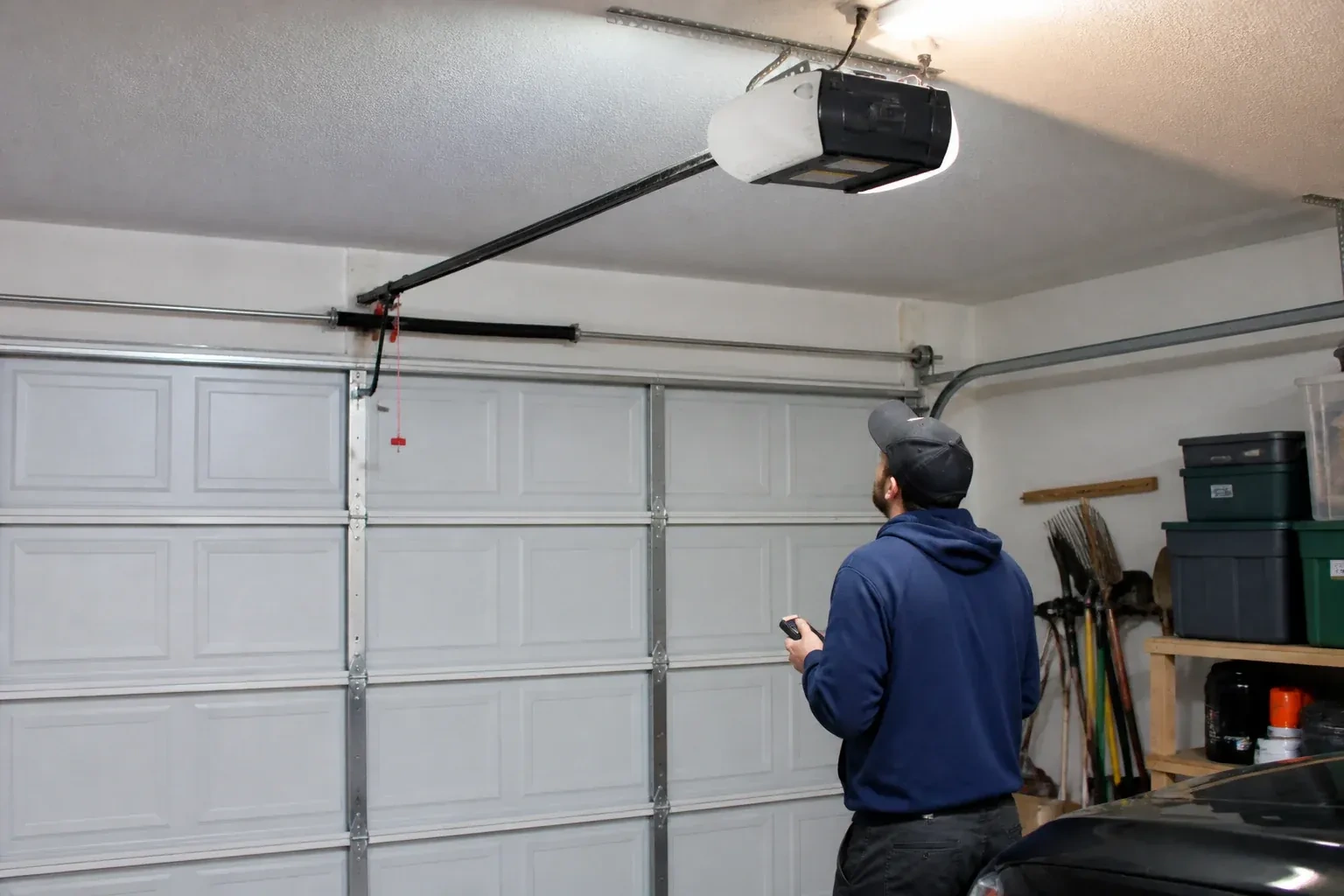 Book soonGarage Door Opener Diagnosis and RepairIt is a January morning and the door lifts about a hand's width, groans, and settles back down.
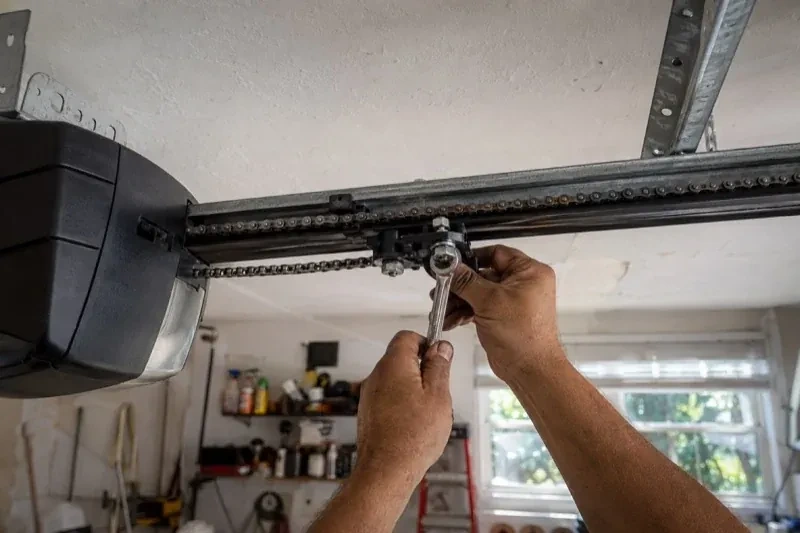 Book soonChain-Drive Opener RepairHalfway up, the door lurches.
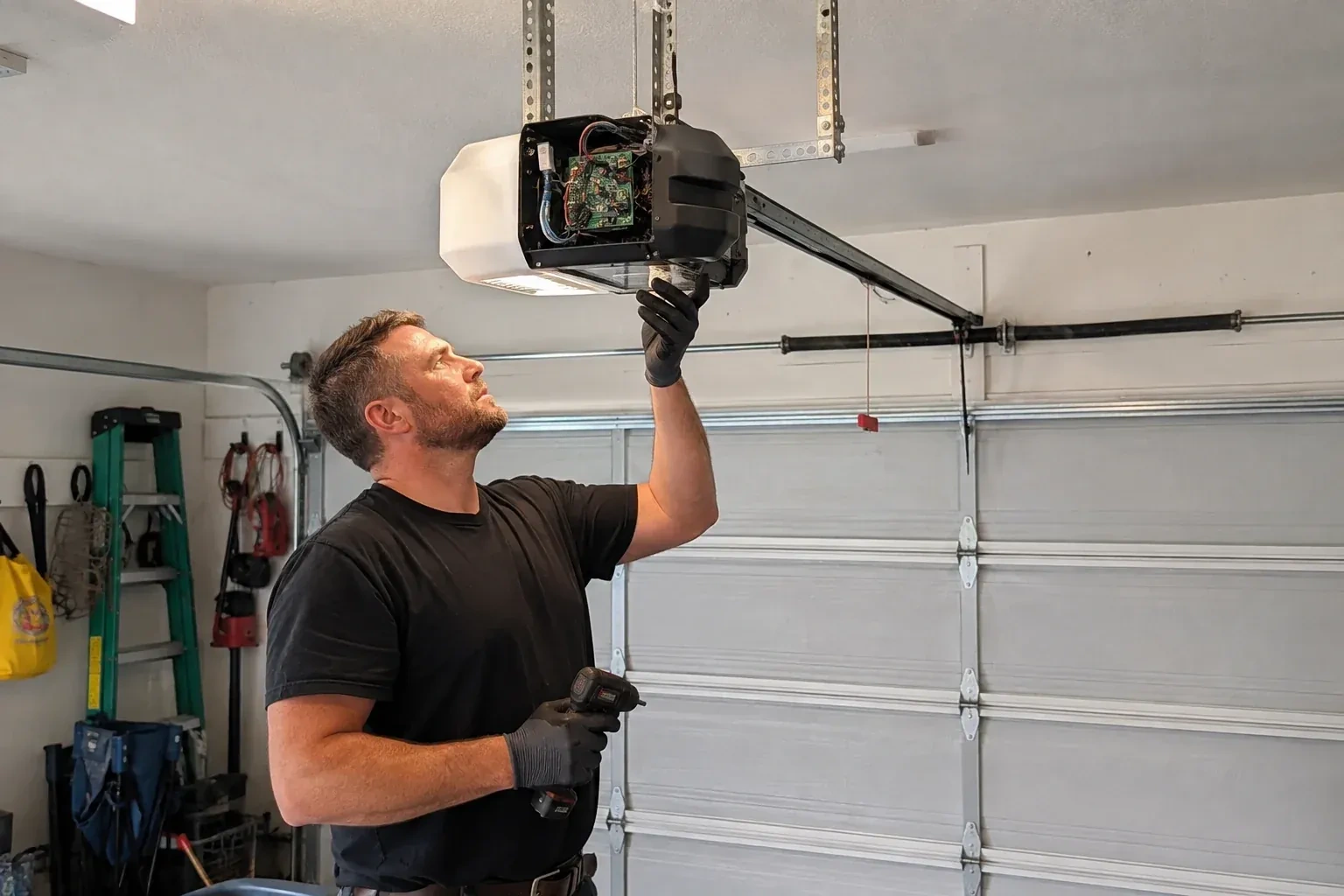 Book soonBelt-Drive Opener RepairPress the remote and the motor runs its full cycle, lights on, the usual whir, but the door does not move a centimetre.
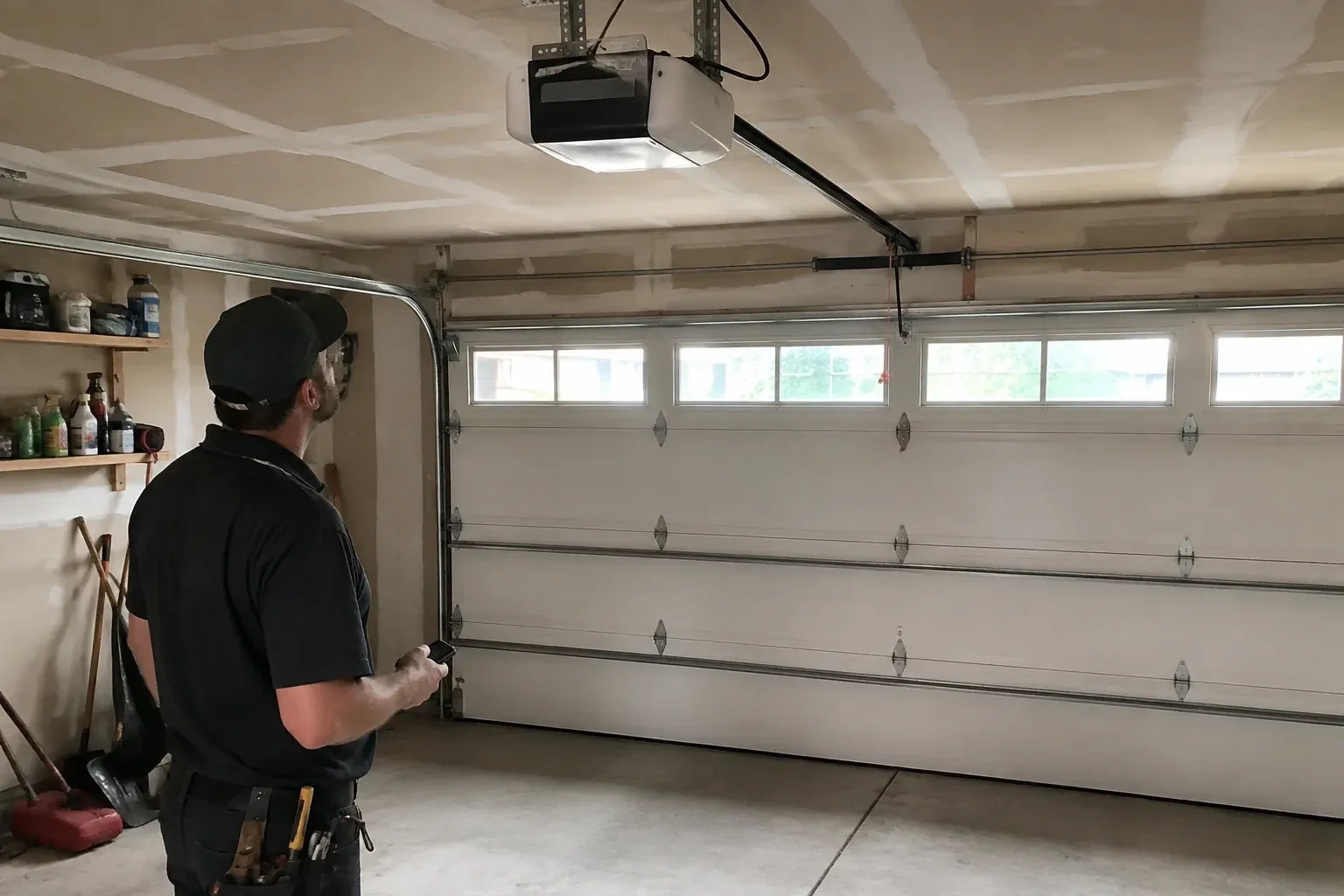 Plan aheadGarage Door Opener Replacement
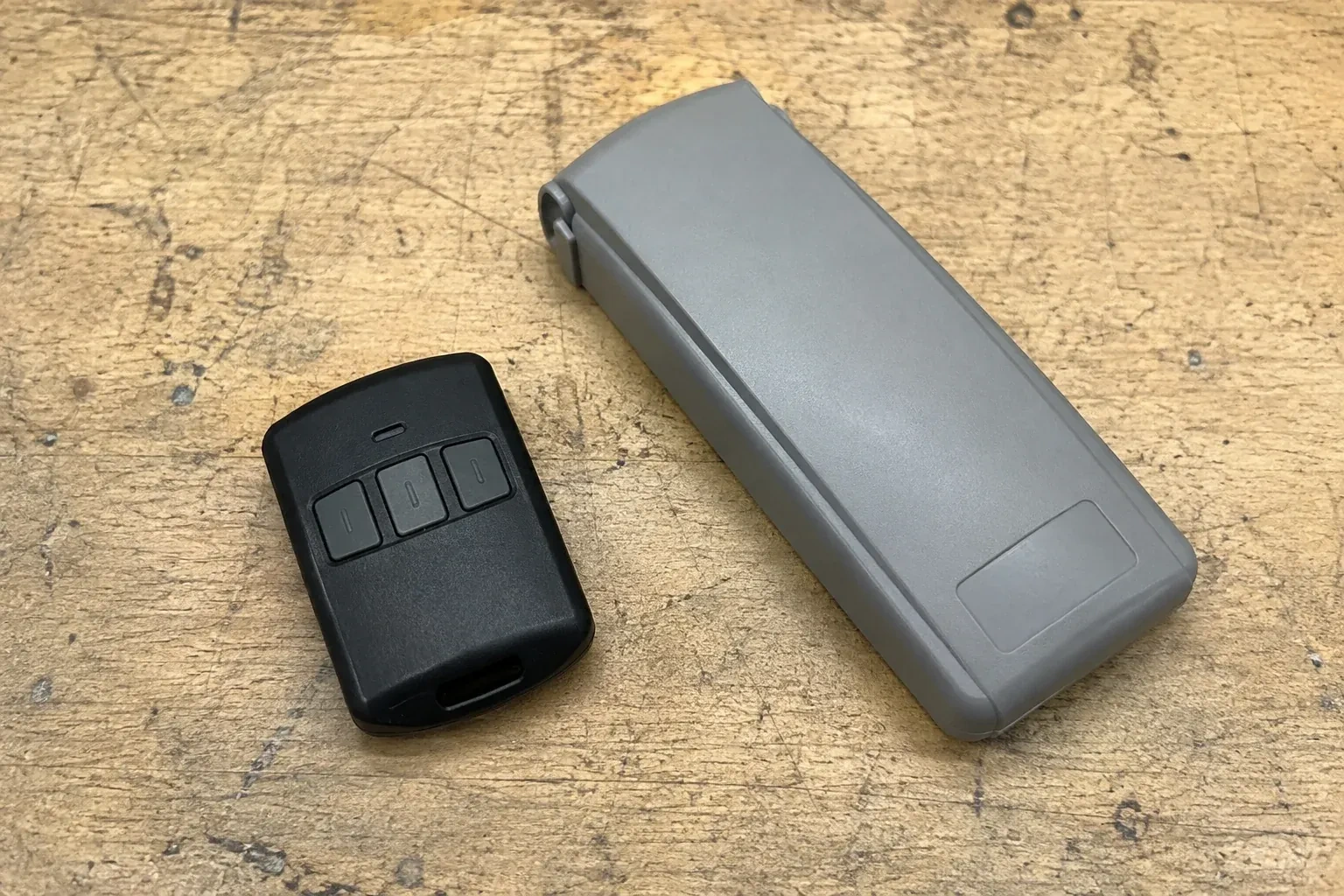 Plan aheadGarage Door Remote and Keypad Programming
Photo-Eye Sensor Alignment or Replacement near you
Halton, Ontario
Palmer information
- Town
- Palmer, Halton, Ontario
- In business
- 22 years
- Hours
- Open 24/7 · nights, weekends and holidays, same fees
- Phone
- (289) 816-6526
- Visits
- On-site assessment preferred. Request a visit or call.
What the census means at the door
47%
Homes of every age. About 47% of homes in Burlington were built in 1980 or earlier, according to the 2021 Census.
A mixed housing stock means some doors are on their original openers without photo-eyes while others have modern units with apps and keypads. We handle both: upgrading the older ones for safety and quietness and adjusting or expanding the newer ones as the household grows.
50%
A mix of homes. Single-detached houses make up about 50% of homes in Burlington (2021 Census).
In mixed neighbourhoods, noise matters differently from one address to the next. A detached house with a bedroom above the garage and a townhouse with a neighbour through the wall both benefit from a belt-drive opener and nylon rollers, and we explain the difference either way.
Open 24/7
Request a visit
The door will only go down while a finger stays on the wall button; let go and it stops or reverses.
Call now · open 24/7(289) 816-6526- On-site assessment preferred
- Same fees day, night or weekend
- 22 years in business