Book soon Openers · Tyandaga
Chain-Drive Opener Repair in Tyandaga
Halfway up, the door lurches. Something in the drive skips a beat, the chain jumps, and the door finishes its travel with a jolt.
Call now · open 24/7(289) 816-6526Right now
Before the door is looked at
Call (289) 816-6526, open 24/7.
Pull the release with the door fully closed whenever possible, and keep the opening clear as you do. Once the trolley lets go, the door is held by its springs alone, and a closed door can still shift unexpectedly.
Never raise the force setting to push a door through a frozen seal, a stiff track or a tired spring; force is set as low as reliably closes the door, and the reason the door is hard to move is fixed instead.
In plain words
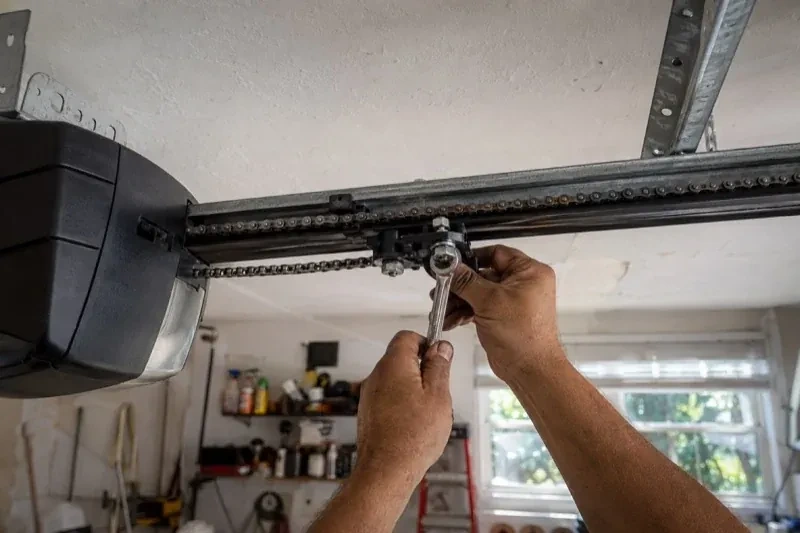
A chain-drive opener moves your door with a steel chain that runs along a rail from a sprocket on the motor head to a trolley hooked to the door arm. The technician first confirms the door is balanced, since the chain only guides a door the springs already carry. Then the chain is checked for stretch and rust, the sprocket and the gear behind it for worn teeth, the trolley and its release for wear, and the rail and hangers for movement. Whatever has failed is replaced with parts made for that model, tension and limits are set, and the safety reversal is tested.
How the visit goesThe chain in the detached garage went orange with rust over the winter, the links are stiff, and the opener strains and groans to pull the door up. By afternoon, once the garage warms, it behaves almost normally.
Chain-Drive Opener Repair · Tyandaga
How the visit goes
- 1
Rail, hangers and the bracket in the wall
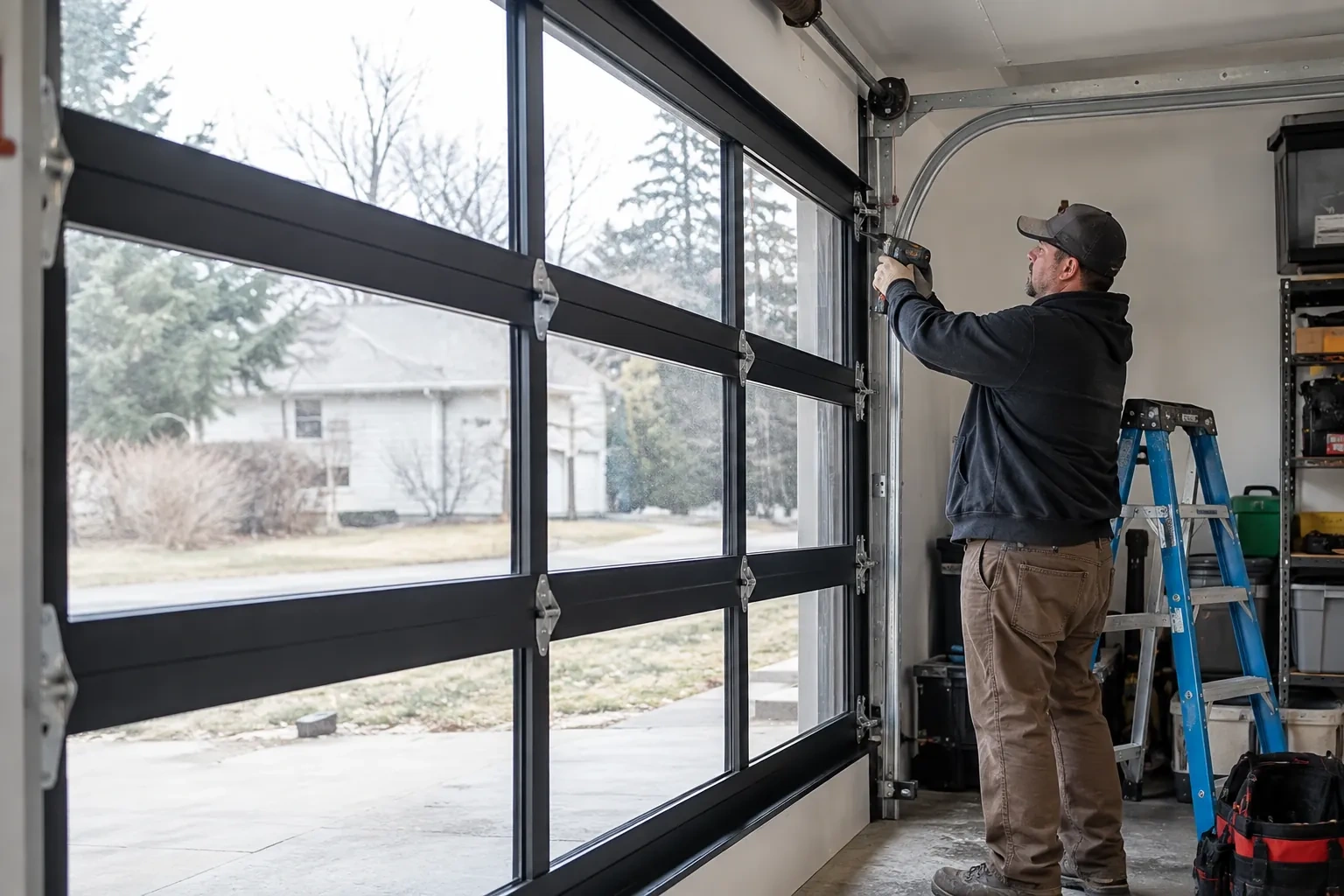
The rail is a structural part of the drive, and a chain cannot run true on a rail that moves. The technician checks that the perforated angle iron hanging the head from the joists is tight and stiff, that the rail is level along its length and angled slightly down away from the header, and that the splice plates at the rail joints are snug. The header bracket above the door is checked for lag screws that have loosened in the wood, which lets the whole rail lift a little on each cycle and shows as a rattle along the garage. Loose hardware is tightened or replaced before tension is set, since a flexing rail makes the measurement meaningless.
- 2
Fitting a new chain
A stretched or rust-bound chain is replaced as a unit. The technician disconnects the door, slackens the tensioner and opens the master link, then draws the old chain off the sprocket, through the trolley and around the idler at the door end. The new chain, sized to the rail length, is threaded the same way, joined at the master link with the clip facing away from the direction of travel, and settled onto the sprocket teeth by hand. Any cable section on a combined chain-and-cable drive is checked for fraying and renewed if needed. The chain is then tensioned to the rail's specification and the trolley run by hand along its full length.
- 3
Getting the chain drive through the cold
In a detached or unheated garage the drive has been set up for winter: force adjusted so the door moves at low temperature without the operator being oversensitive, the rail greased, and the door hardware lubricated before frost. Two habits help. Keep the threshold clear of snow and slush so the bottom seal does not freeze to the slab, and if the door reverses on a bitter morning, free the seal rather than pressing the button repeatedly; the operator is doing what it should. Expect the chain to sound a touch different at minus twenty, and let the garage warm before deciding something is wrong.
In the van
- Drive gear and worm gear kit
- Trolley release lever
- Roller chain with master link
- Rail hangers and header bracket
- Idler sprocket or pulley
What affects the quote
- 1
Trolley and release parts
A worn inner or outer trolley, a cracked latch or a bent release lever are replaced as separate pieces, and whether any of them is needed shows only once the trolley has been run along the rail by hand.
- 2
Sensors and controls that fail the check
Photo eyes that are misaligned, mounted too high or dead, or a wall control that has stopped responding, are put right before the reversal can be proven and are itemised where parts are involved.
- 3
A detached or unheated garage
Cold-rated lubricant, a chain replaced rather than freed, and force set for low temperatures are choices made for a garage that sees winter, and they show in the parts and the time.
Same fees day, night or weekend.
Chain-Drive Opener Repair: questions
Why does the door jerk or jump at the same spot every time?
A repeatable jolt at one point on the rail is usually a chain problem meeting a sprocket problem: a stiff link or a spread master link passing over worn sprocket teeth, so the chain rides up and drops a tooth. It can also be a burr or a splice plate on the rail where the trolley catches, or a roller on the door hanging up in the track at that height. The technician runs the door by hand first to tell the two apart.
How much slack should the chain have?
It is a measurement, taken with the door closed and disconnected from the trolley. At the middle of the rail the chain should sit at the height the opener's own manual specifies for its rail shape, since the figure is not the same across makes. The two nuts on the trolley set and lock it. With the door reconnected and closed, some droop appears; that is expected as long as the measurement returns when the door is open.
Should I oil the chain?
Follow the opener's manual, and lean toward less. Many makers ask for the chain to be left dry or given only a very light treatment, because a heavily oiled chain collects grit that grinds the sprocket and drips onto the car. The grease that matters is white lithium on the rail where the trolley runs, renewed every two or three years, and on the gears inside the head, which the technician packs during a repair. Penetrating sprays are kept away from the whole drive.
Openers & Access
Bigger photo, sooner job: Emergency Book soon Plan ahead
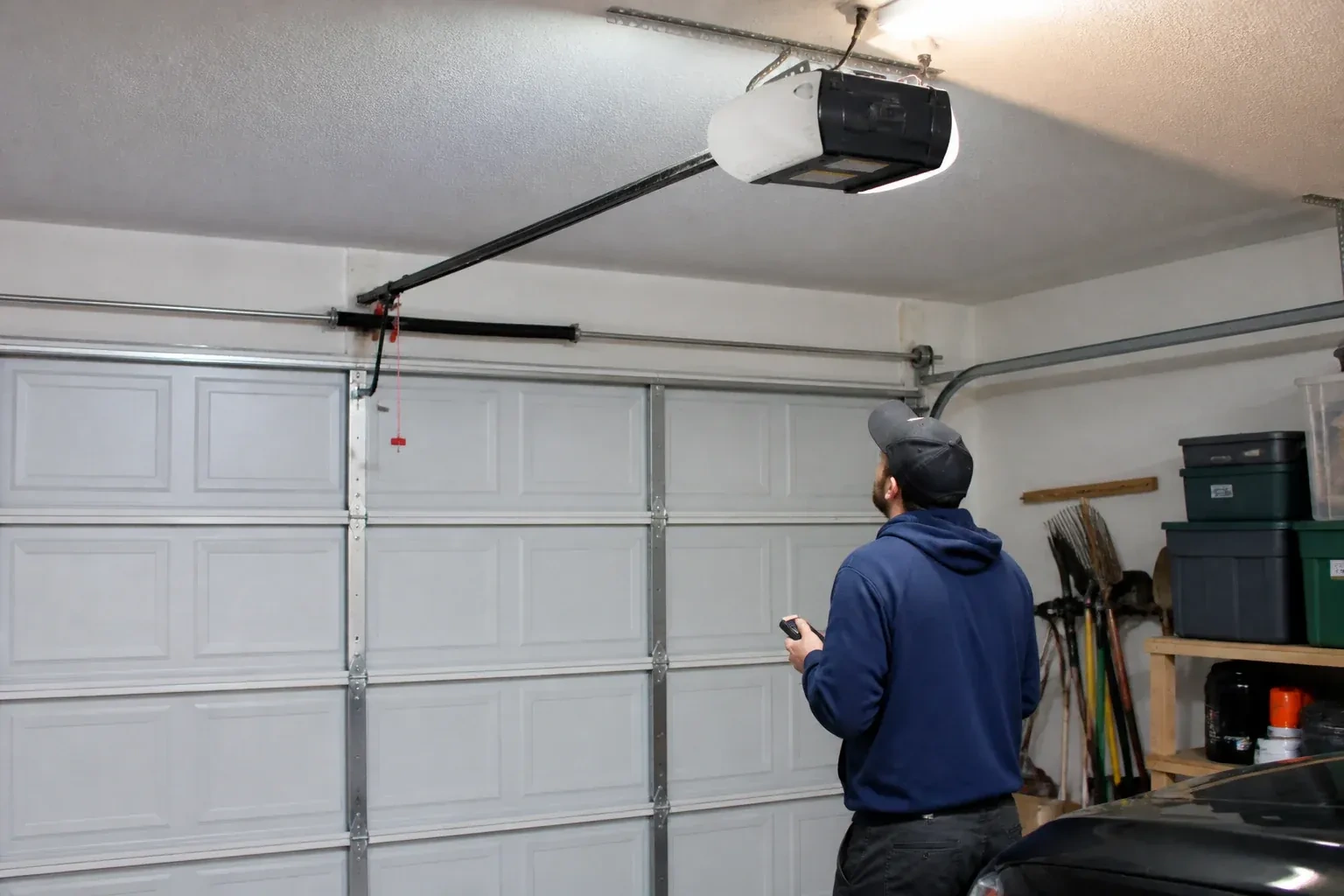 Book soonGarage Door Opener Diagnosis and RepairIt is a January morning and the door lifts about a hand's width, groans, and settles back down.
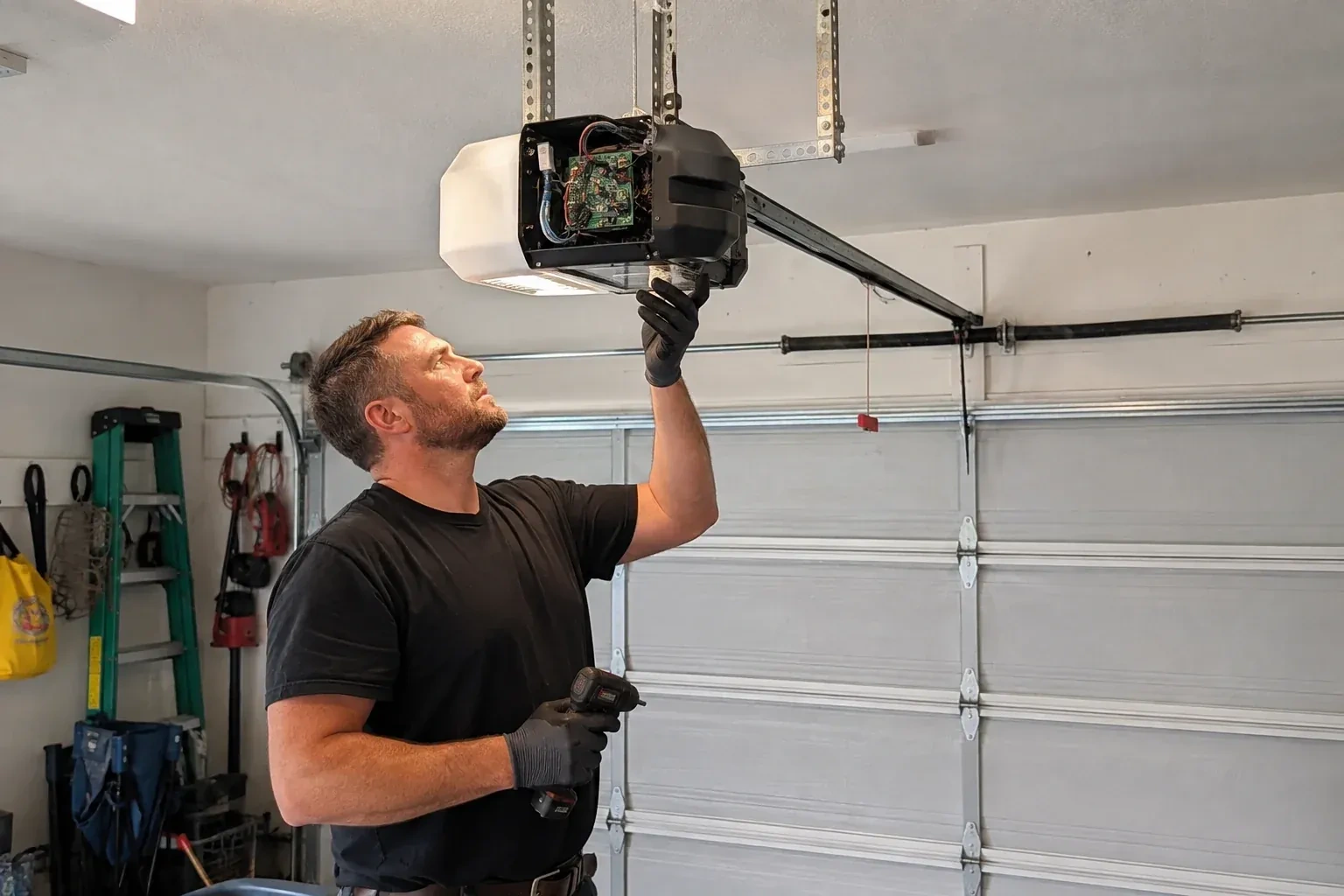 Book soonBelt-Drive Opener RepairPress the remote and the motor runs its full cycle, lights on, the usual whir, but the door does not move a centimetre.
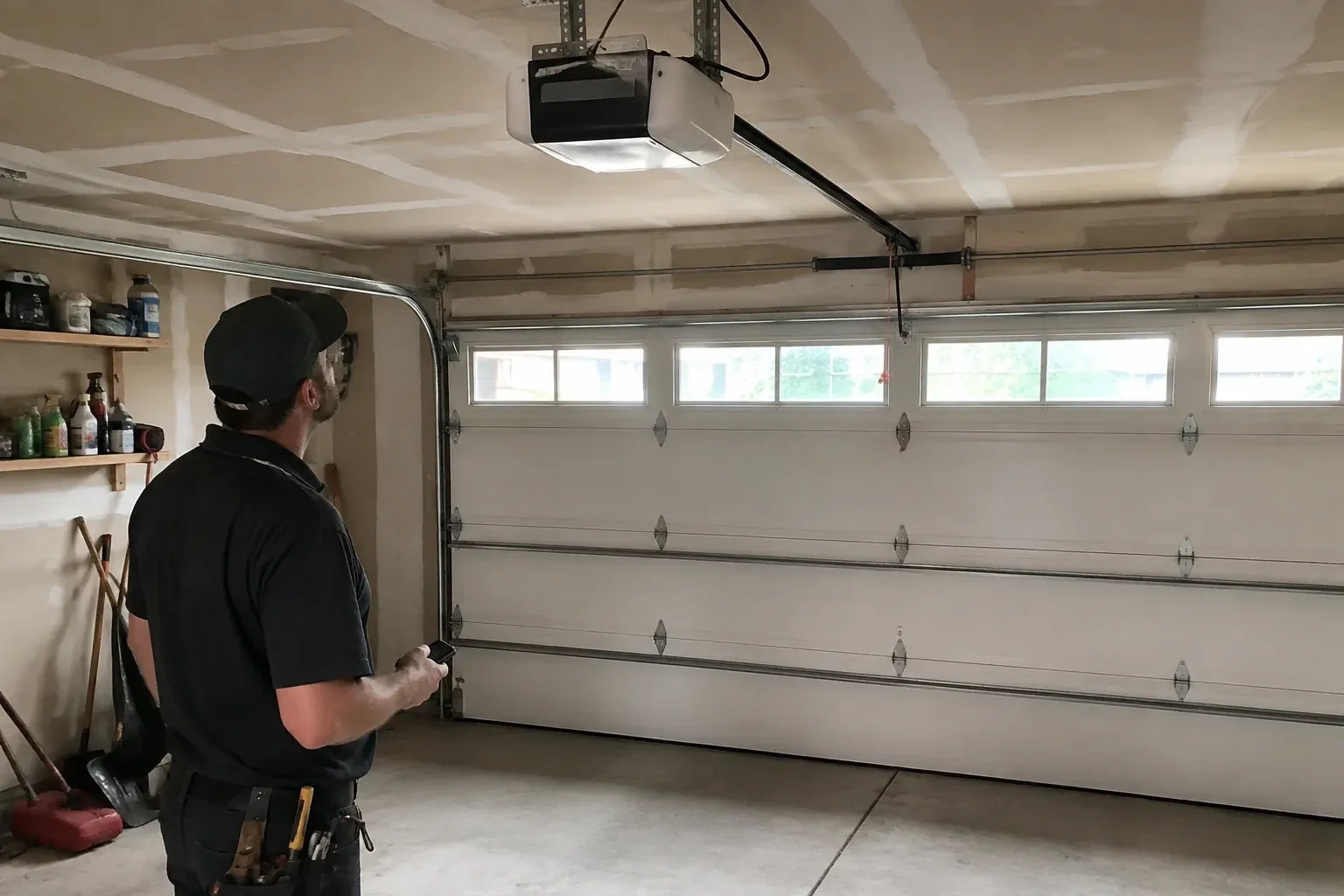 Plan aheadGarage Door Opener Replacement
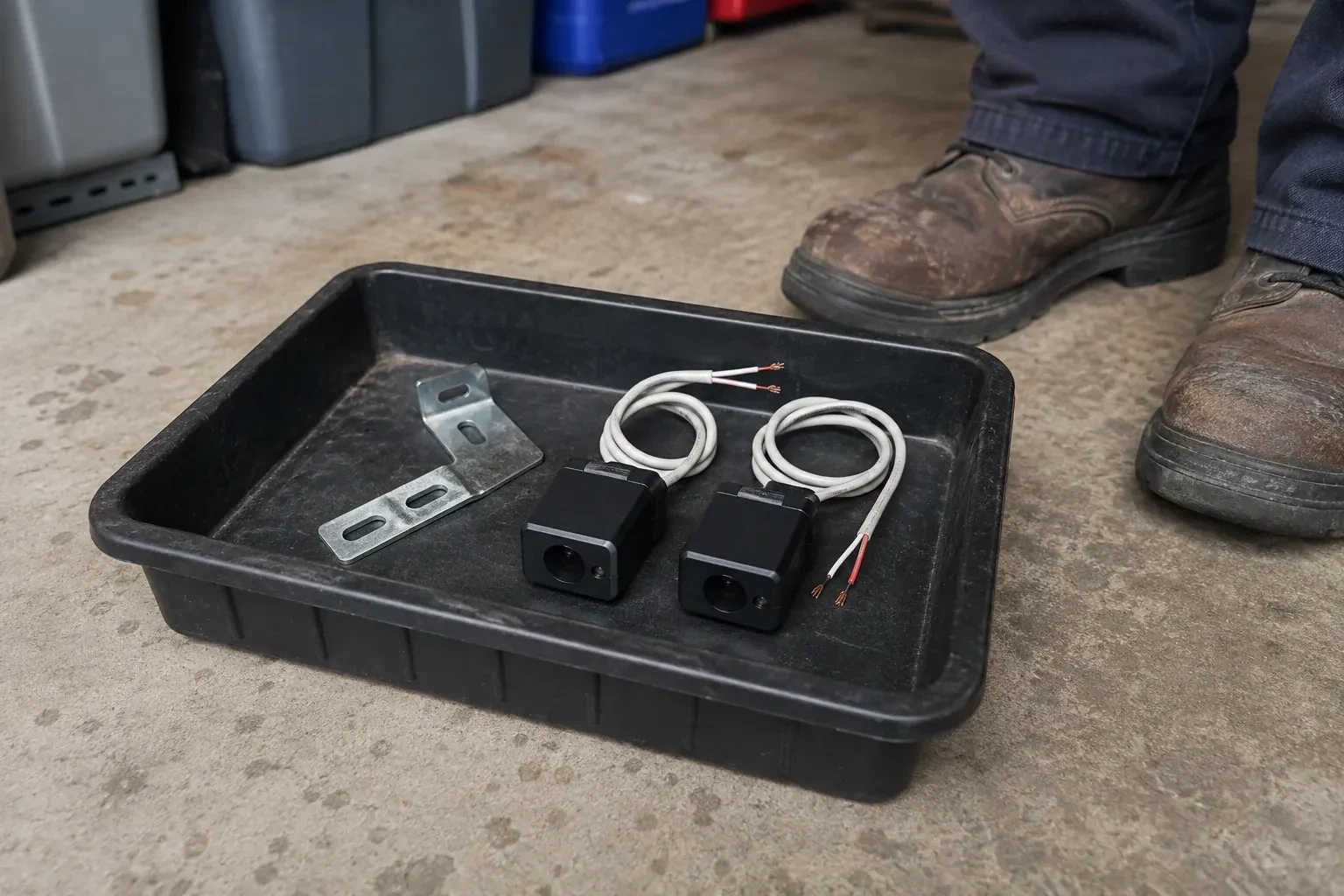 Book soonPhoto-Eye Sensor Alignment or ReplacementThe door will only go down while a finger stays on the wall button; let go and it stops or reverses.
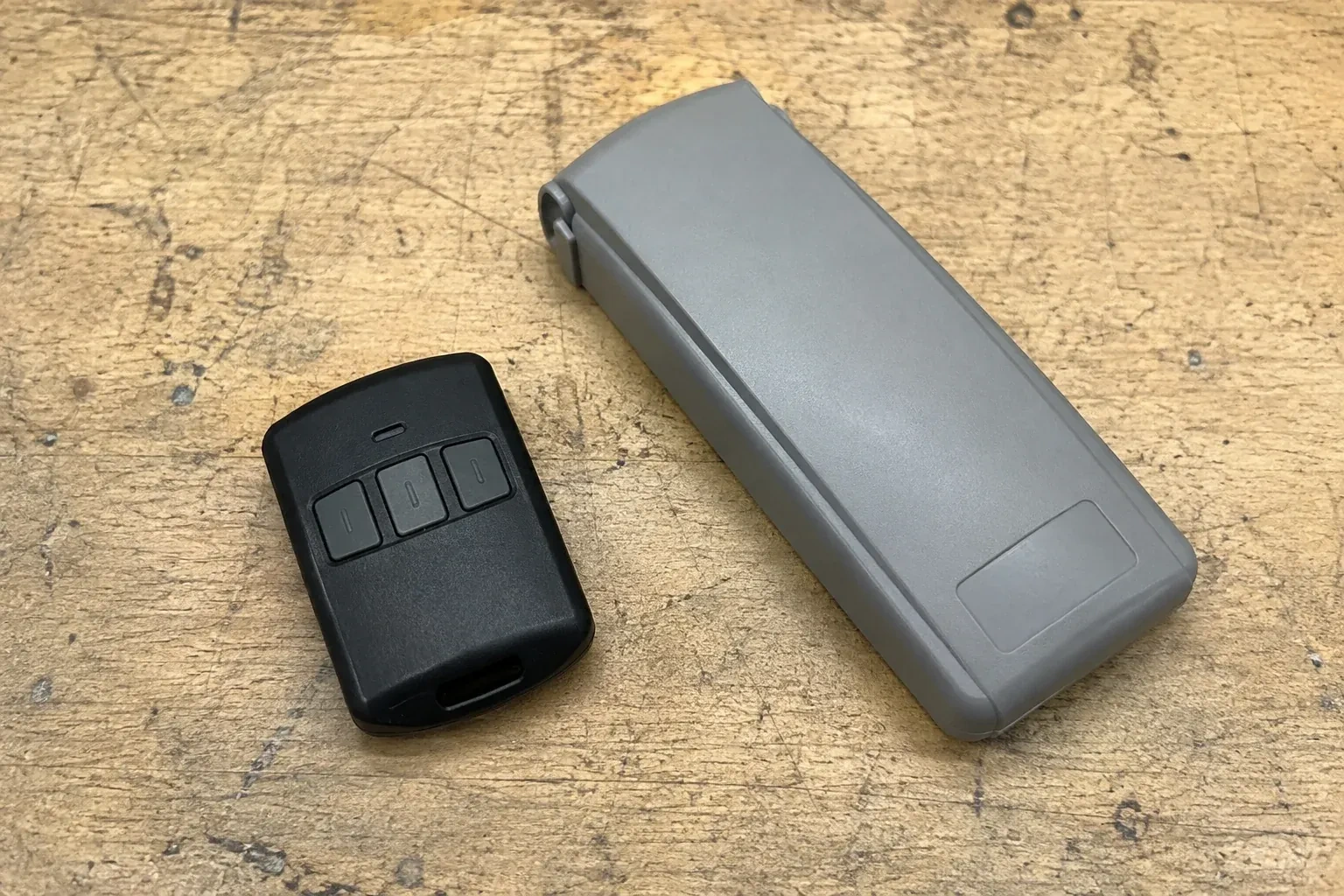 Plan aheadGarage Door Remote and Keypad Programming
Chain-Drive Opener Repair near you
Halton, Ontario
Tyandaga information
- Town
- Tyandaga, Halton, Ontario
- In business
- 22 years
- Hours
- Open 24/7 · nights, weekends and holidays, same fees
- Phone
- (289) 816-6526
- Visits
- On-site assessment preferred. Request a visit or call.
What the census means at the door
47%
Homes of every age. About 47% of homes in Burlington were built in 1980 or earlier, according to the 2021 Census.
Where homes of different ages sit together, the common thread is that every door eventually needs springs, rollers, seals and a balance check. What differs is the spring type and the size, so the technician measures and matches rather than fitting a standard part.
50%
A mix of homes. Single-detached houses make up about 50% of homes in Burlington (2021 Census).
A blend of housing means a blend of garages: spacious attached garages with full headroom on the detached lots, and tight tandem garages with little side room in the attached units. Openers, tracks and springs are all sized at the door rather than assumed from the street.
Open 24/7
Request a visit
Halfway up, the door lurches.
Call now · open 24/7(289) 816-6526- On-site assessment preferred
- Same fees day, night or weekend
- 22 years in business