Book soon Openers · Tyandaga
Emergency Release Repair in Tyandaga
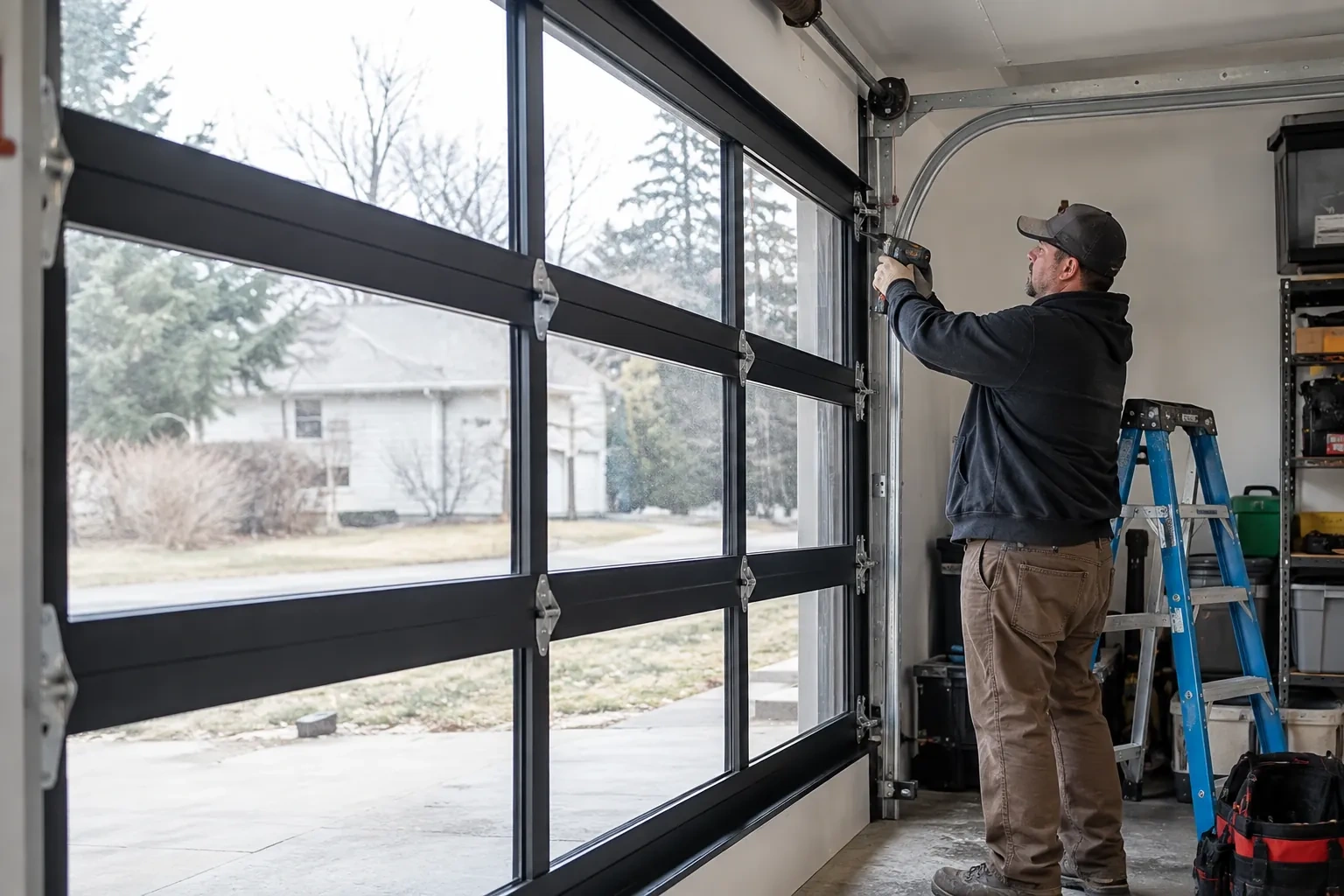
Someone pulled the cord last spring to get a car out during an outage, and the door has never properly rejoined the opener. Press the button and the trolley glides along the rail by itself while the door stays exactly where it is.
Call now · open 24/7(289) 816-6526Right now
Before the door is looked at
Call (289) 816-6526, open 24/7.
Pull the release with the door fully closed whenever possible, and keep the opening clear as you do. Once the trolley lets go, the door is held by its springs alone, and a closed door can still shift unexpectedly.
Lift a door by its handles or the gripping points on the panel face, never at the joint between sections, which closes as the door bends around the track.
Never drive a vehicle at a closed door to get out; the door collapses and the stored tension in the counterbalance is released. Use the release, the outside key release, or a technician.
In plain words
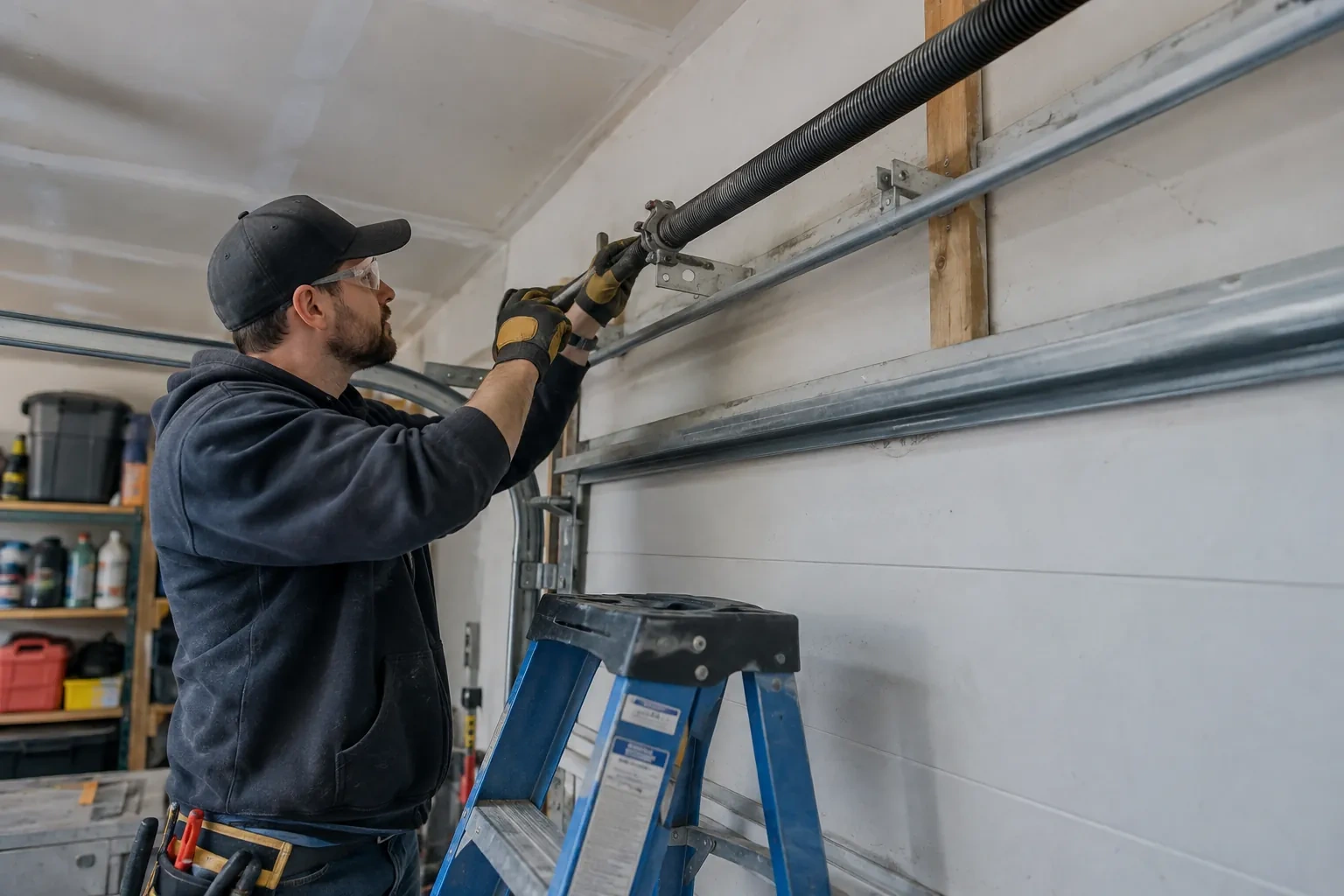
The release only earns its keep on a door that behaves once it is free of the opener, so the visit starts with the door closed and a balance test rather than with the handle. Disconnected, a healthy door lifts with modest effort, holds around a metre off the floor and stays put at the top. That is the door the release is designed for. If the door is heavy, drifts down or shoots up, the springs need attention first, work done with winding bars by a technician trained for tensioned hardware. Once the door passes, the release work goes ahead and the system is proven together.
How the visit goesHalfway up, the door lets go of the opener with a clunk and sinks back to the floor while the trolley carries on to the top alone. It has happened three times this month, and each time the release lever is found half-cocked.
Emergency Release Repair · Tyandaga
How the visit goes
- 1
Reading the release as a chain of parts
With the door settled, the release is inspected link by link rather than as a single handle. The cord: frayed, knotted, sun-rotted or cut short. The handle: present, red, and the right shape to grip. The lever on the trolley: does it swing fully to the release position and snap back, or is it bent, sticky or missing its spring. The trolley and carriage: are the latch surfaces worn, is the body cracked, is the arm to the door straight. The stops at either end of the rail: has the trolley been driven into one. Each link is checked so the repair replaces what failed rather than the part nearest to hand.
- 2
Reconnecting and proving the latch
Reconnection is done the way the maker describes for that unit. On most rails the cord is pulled toward the opener so the lever drops back to horizontal, then the opener is run and the trolley picks up the carriage with an audible click on the next cycle; on others the trolley re-latches when the door is lifted until it meets the carriage. The technician watches the join through a full open and close, then pulls the release and reconnects again to be sure the sequence repeats. You are shown what the click sounds like and what a trolley that has only half-latched looks like, so you can tell the two apart.
- 3
Battery backup and outage-prone streets
If your street loses power a few times each winter, the technician may raise battery backup. Modern openers can carry a battery that opens and closes the door on stored power, which spares you the release altogether in most outages. The battery is a wearing part, generally replaced every few years, and the head unit signals when it is tired. The release remains the fallback when the battery is flat or the opener itself has failed, which is why both are kept in working order. You leave knowing which of the two your household relies on and how each one is checked.
In the van
- 2x4 offcut for the reversal test
- Release lever and spring
- Dry lock lubricant and de-icer
- Outside key release kit (lock, cable, keys)
- Rope and red handle kit
What affects the quote
- 1
Travel and tension reset
Where the trolley was freed or swapped, the chain or belt is re-tensioned and the travel limits are reset, then the reversal tests repeated. That setup time is part of the job and shown as such.
- 2
Extra keys and a lockbox
Two keys come with an outside release. Additional keys cut for family members, or a small lockbox for the spare, are small add-ons listed as separate lines.
- 3
Time of the call
A weekday daytime visit and an evening, weekend or holiday one cost the same amount for freeing or repairing an emergency release. The exact figure is confirmed once the technician has seen the trolley, the cord or lever, and how the door was left.
Same fees day, night or weekend.
Emergency Release Repair: questions
What should I tell you when I call?
What the release did: handle missing, cord snapped, trolley will not reconnect, door let go on its own. Where the door was at the time and where it is now. Whether the opener is a chain, belt or screw unit on a rail, or a wall-mounted one beside the door. Whether there is an outside key release and whether you have its key. And whether the garage has a side door or a door into the house. That shapes what comes on the truck.
What exactly is the emergency release on a garage door opener?
It is the manual disconnect between the opener and the door: a red handle on a cord below the rail, connected to a lever on the trolley. Pull it and the trolley lets go of the door so you can move the door by hand, for instance during a power outage. Push the lever back, or run the opener, and the two reconnect. It is required on residential openers, coloured red so it stands out from everything else overhead.
I lost the key to the outside release. What now?
The cylinder can be replaced with a new one and two fresh keys, which is the usual answer since a lost key may be in someone else's hands. On some units the cylinder can be rekeyed instead. Either way the cable and lever are checked while the lock is out, and the technician suggests keeping the spare key outside the garage, with a neighbour or in a lockbox, rather than inside behind the door it opens.
Openers & Access
Bigger photo, sooner job: Emergency Book soon Plan ahead
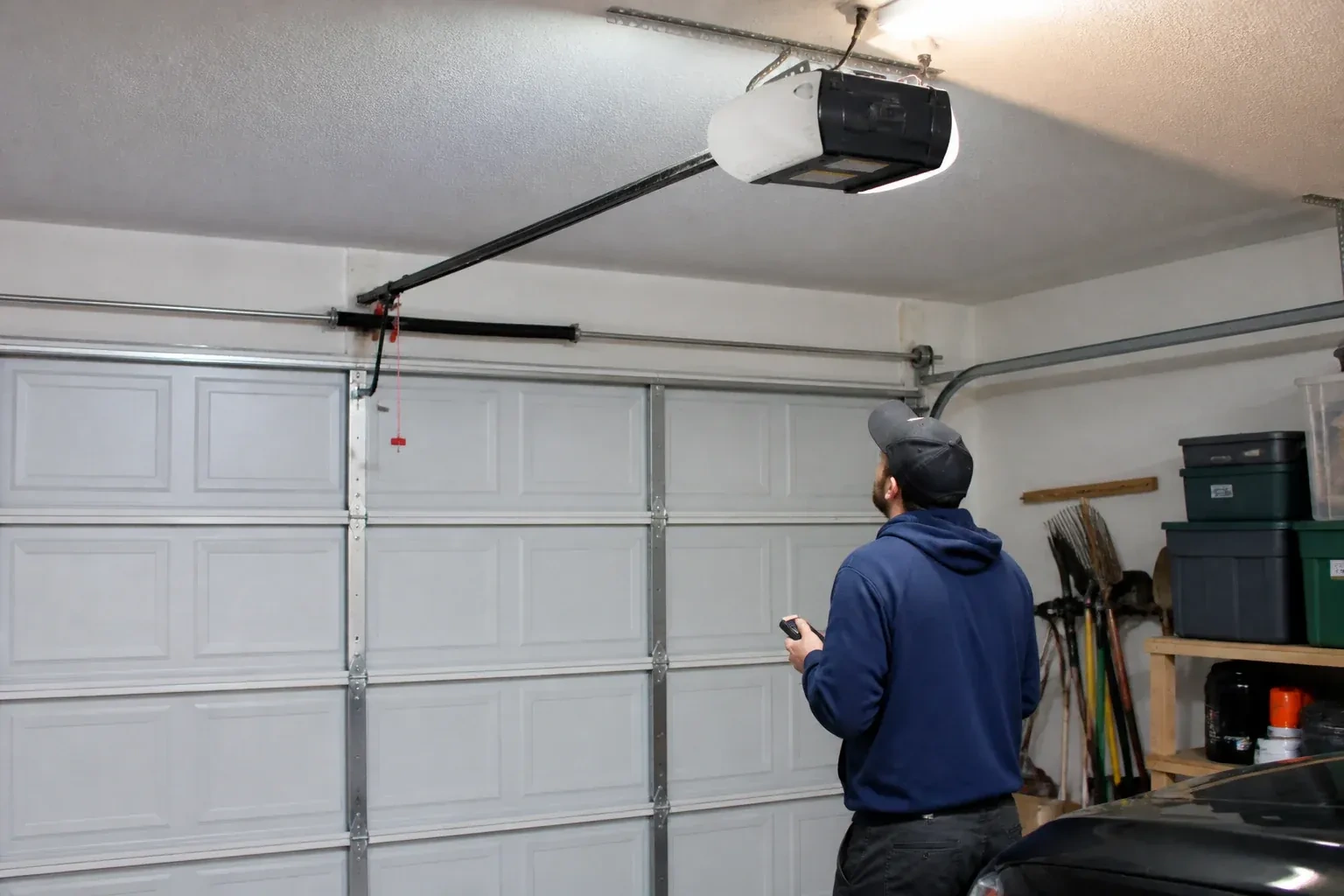 Book soonGarage Door Opener Diagnosis and RepairIt is a January morning and the door lifts about a hand's width, groans, and settles back down.
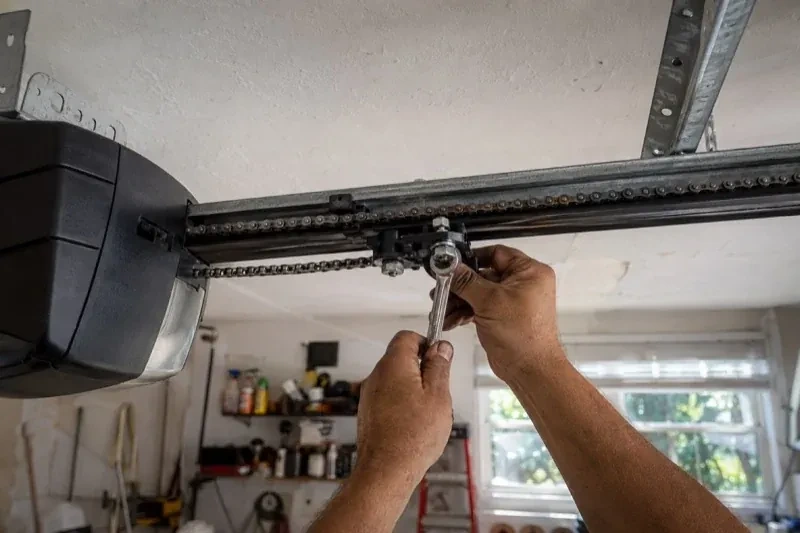 Book soonChain-Drive Opener RepairHalfway up, the door lurches.
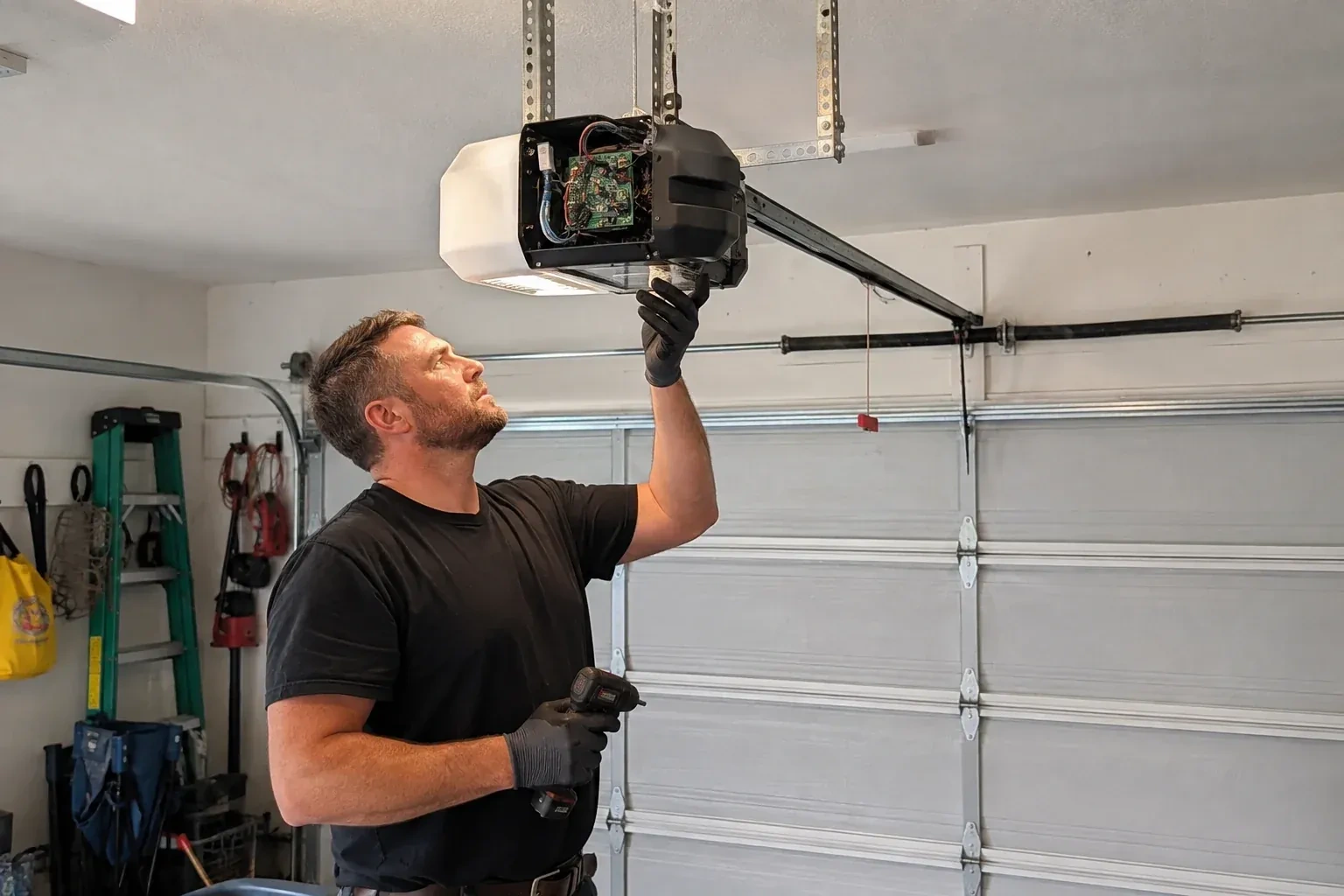 Book soonBelt-Drive Opener RepairPress the remote and the motor runs its full cycle, lights on, the usual whir, but the door does not move a centimetre.
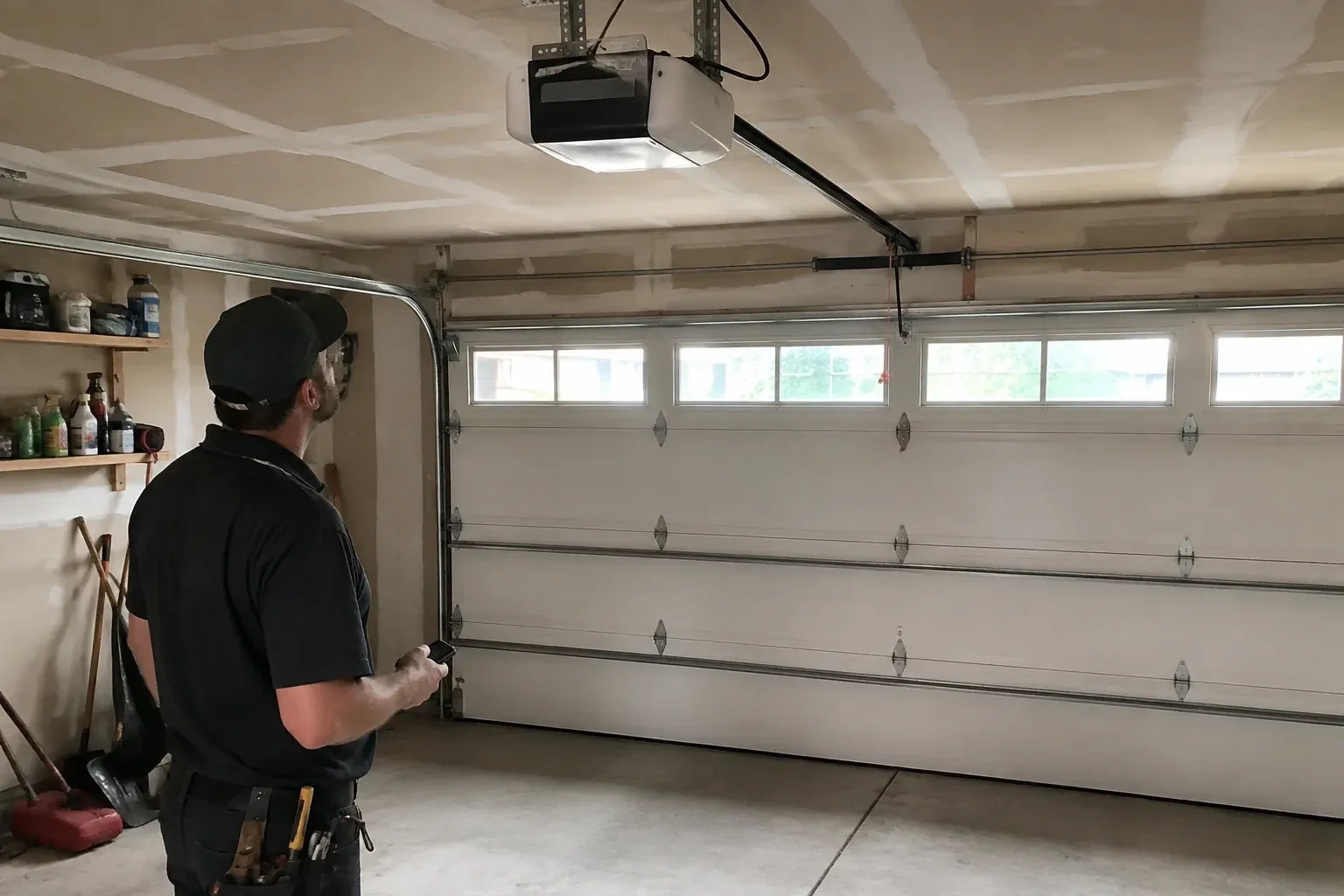 Plan aheadGarage Door Opener Replacement
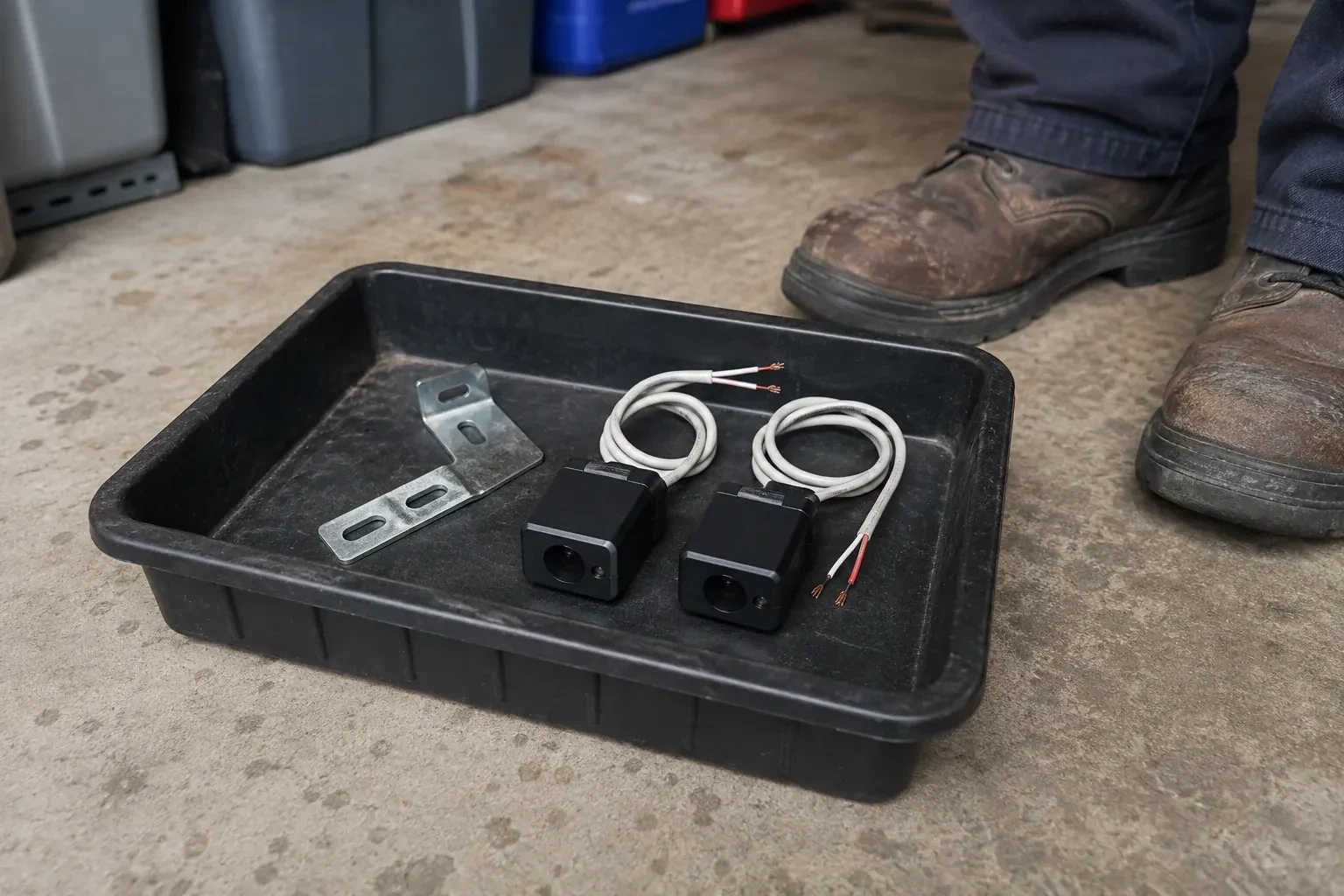 Book soonPhoto-Eye Sensor Alignment or ReplacementThe door will only go down while a finger stays on the wall button; let go and it stops or reverses.
Emergency Release Repair near you
Halton, Ontario
Tyandaga information
- Town
- Tyandaga, Halton, Ontario
- In business
- 22 years
- Hours
- Open 24/7 · nights, weekends and holidays, same fees
- Phone
- (289) 816-6526
- Visits
- On-site assessment preferred. Request a visit or call.
What the census means at the door
47%
Homes of every age. About 47% of homes in Burlington were built in 1980 or earlier, according to the 2021 Census.
Where homes of different ages sit together, the common thread is that every door eventually needs springs, rollers, seals and a balance check. What differs is the spring type and the size, so the technician measures and matches rather than fitting a standard part.
50%
A mix of homes. Single-detached houses make up about 50% of homes in Burlington (2021 Census).
A blend of housing means a blend of garages: spacious attached garages with full headroom on the detached lots, and tight tandem garages with little side room in the attached units. Openers, tracks and springs are all sized at the door rather than assumed from the street.
Open 24/7
Request a visit
Someone pulled the cord last spring to get a car out during an outage, and the door has never properly rejoined the opener.
Call now · open 24/7(289) 816-6526- On-site assessment preferred
- Same fees day, night or weekend
- 22 years in business